B2B SaaS
B2B Product Site
1,200 pages
A software product site with high topical ambition but uneven template quality and structured data coverage.
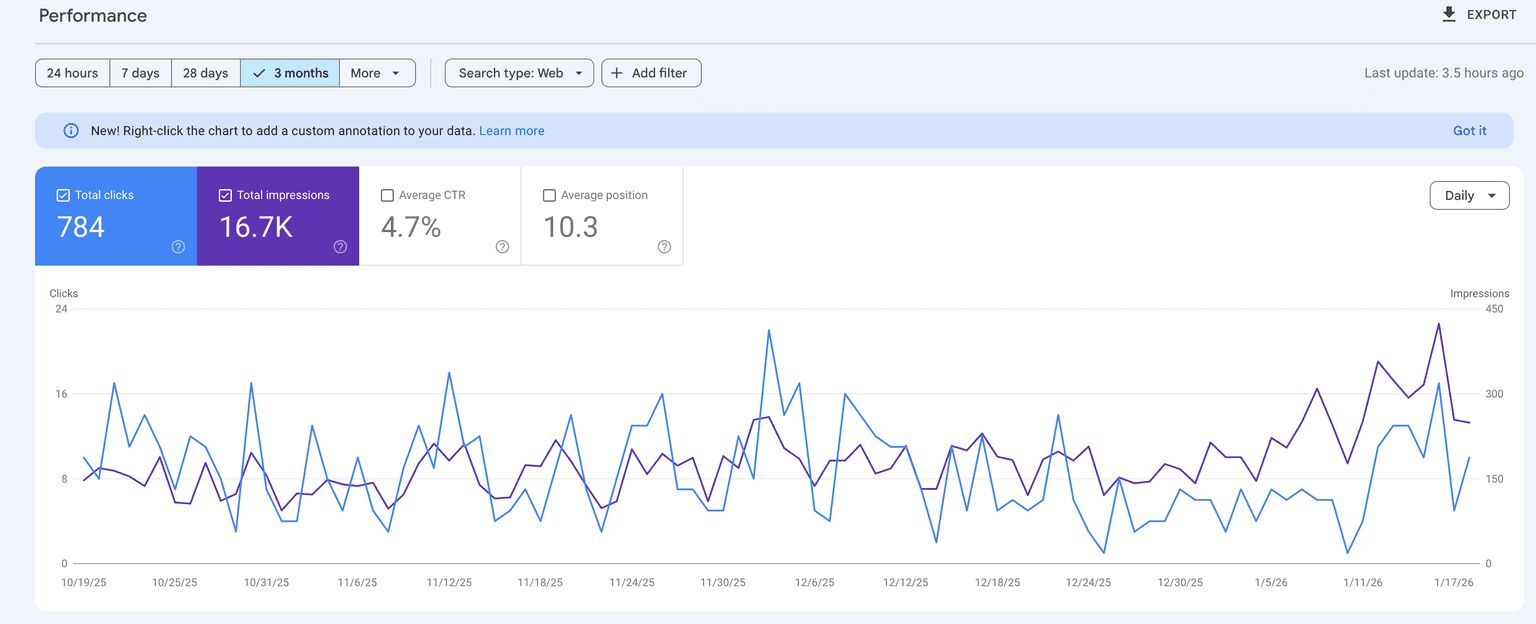
Key Highlights
Challenge
The growth engine depended on scalable landing pages, but the site was underperforming on indexing depth and discoverability.
What We Changed
We improved technical hygiene across templates, strengthened structured data, and focused the architecture around clearer expansion paths.
Outcome
The site gained stronger index coverage and search visibility, making the content program far more reliable as a growth channel.
Selected Metrics
Impressions
+200%
CWV Poor Pages
0
CWV Good Pages
250
Pages in Index
1,160 (96%+)
Rich Snippets
60 pages
Multi-lingual
4 languages
What This Pattern Means
This case study is useful because it shows how technical SEO problems usually behave in production: they emerge as system friction, not as a single isolated bug. In many websites, the visible symptom may look like weak growth, slow indexation, unstable snippets, or poor crawler efficiency. The real cause is often a combination of route logic, rendering behavior, template quality, and structural decisions made long before search performance starts to flatten. That is why the most valuable part of the work is understanding the mechanism behind the issue, not only listing the issue itself.
Once the technical pattern is isolated, the intervention can be prioritized in a much more rational way. Instead of shipping generic SEO cleanup, the team can align engineering work around the pages and systems that influence discoverability most. That is what makes the outcome durable. The result is not just a short-term metric improvement, but a cleaner foundation for future growth across the same template groups, route structures, and machine-facing delivery paths.
How Teams Use Cases Like This
Buyers typically use case studies at the stage where they already understand that something technical is blocking growth, but they are still deciding whether the issue on their own site is specific enough to justify a formal audit. A good example reduces that uncertainty. It gives engineering leaders a model for how the problem might be diagnosed, gives product owners a sense of how the work would be prioritized, and gives marketing stakeholders more confidence that the final output will be implementation-ready rather than theoretical.
For that reason, a case study page should not be judged only by the headline metric. It should also help the reader understand the route from issue to intervention to validation. When that story is clear, the case study becomes a commercial asset, not just a proof block. It helps bridge the gap between educational content and the decision to book a technical audit conversation.
Need Similar Work?
If your site has the same technical friction, we can scope the audit around the systems driving the problem.
FAQ
Questions about this technical SEO case study
The FAQ on this page is meant to make the content easier to evaluate in practical terms. Instead of leaving important points implied, the answers below clarify the questions visitors usually have when they are comparing fit, understanding scope, reviewing expectations, or trying to decide what the next step should be after reading the page.
On a specialist services site, FAQ sections do more than fill space. They reduce friction between learning and decision-making. They help readers translate a page from marketing language into clearer operational meaning, which is especially useful on pages dealing with technical SEO audits, process, case studies, deliverables, legal terms, and trust-related information.
What kind of problem does this case study represent?+
It represents a technical SEO engagement where rendering, crawlability, indexation, or template quality was limiting search visibility and growth.
Are the numbers and examples anonymized?+
Yes. The case study is intentionally anonymized so the focus stays on the technical pattern, the intervention, and the measurable result.
Can Prerendering scope similar work for our site?+
Yes. If your team is dealing with similar technical blockers, the audit can be scoped around the systems and templates driving the issue.