Optimizing infrastructure for Microsoft Copilot requires delivering fully serialized HTML payloads directly to AI retrieval systems so semantic data can be extracted deterministically. If the route responds with a thin JavaScript shell instead of a complete document, Copilot has less trustworthy source material to synthesize and cite. Updated for April 2026, this guide reflects the current behavior of Bingbot and the crawlers Bing uses, which underpin Copilot's discovery and retrieval layer.
That makes SEO for Copilot an architecture problem as much as a content problem. The site has to expose deterministic HTML, stable metadata, valid structured data, and a machine-readable body structure in the first response. On JavaScript-heavy websites, this usually overlaps with the same rendering and crawlability issues that already affect AI visibility, JavaScript SEO, prerendering, and the broader practice of structured data for AI visibility. Clear entity declarations, including Organization markup, give Copilot stronger signals when reconciling the route with its underlying knowledge graph.
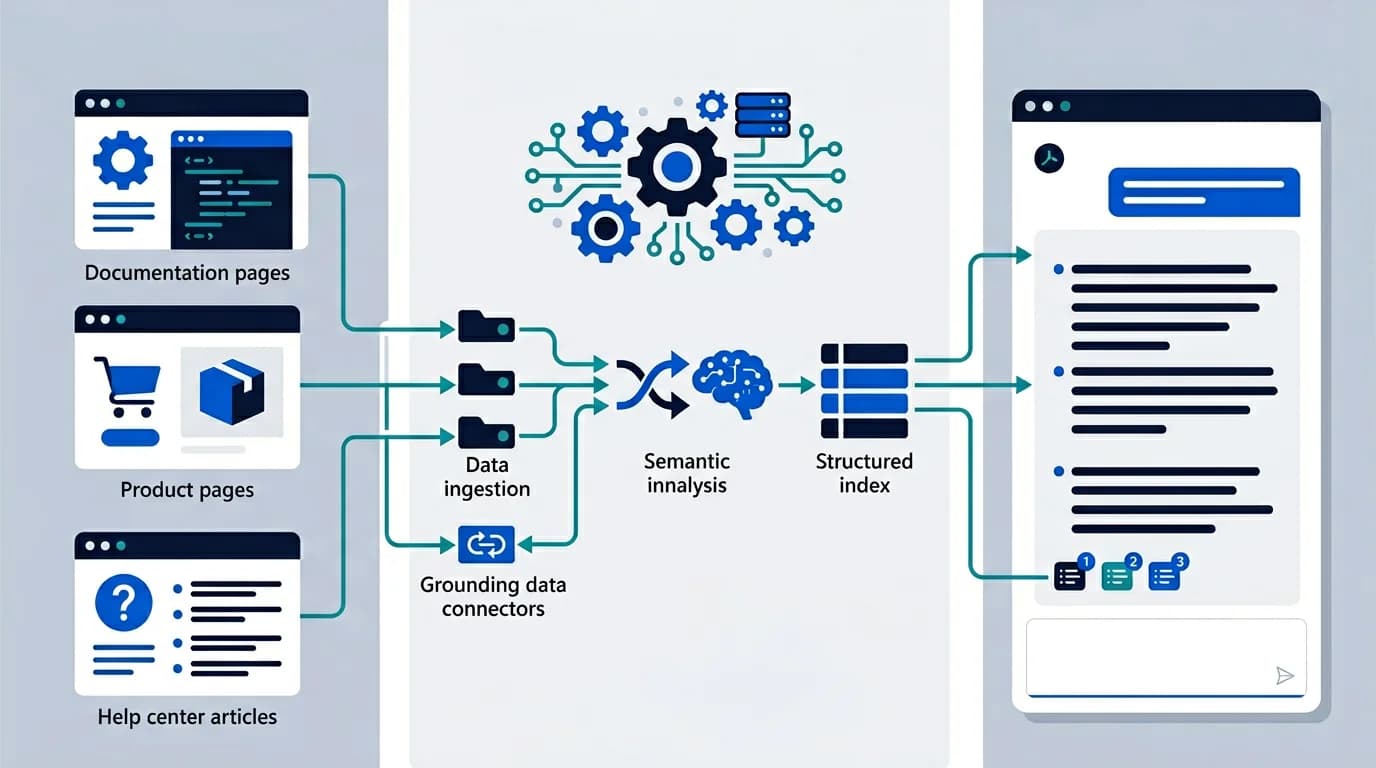
This article explains how Microsoft Copilot processes web content, why single-page applications still create machine-facing visibility loss, what technical SEO requirements matter most for Copilot, how prerendering middleware fits the delivery path, and which rendering strategies create the clearest machine-readable output.
How Does Microsoft Copilot Process Web Content?
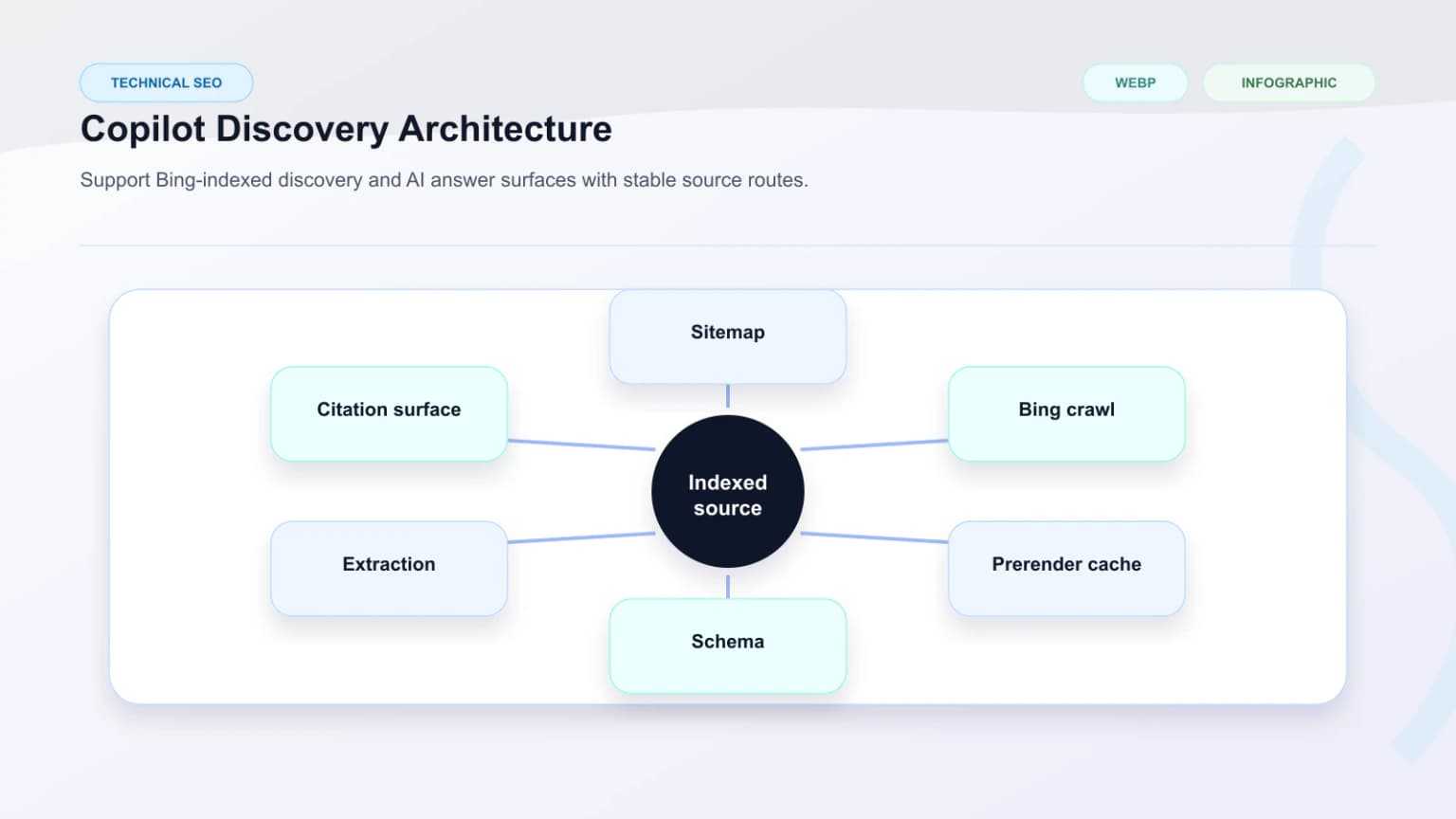
Microsoft Copilot combines the underlying Bing discovery layer with AI-assisted synthesis and live retrieval patterns. From a technical SEO perspective, that means the route needs to work both as a search-discoverable URL and as machine-readable source material for AI-assisted answers.
This dual pressure is what makes Copilot-facing optimization especially technical. The route cannot rely only on eventual rendering quality for a human browser session. It needs to expose useful content, metadata, headings, and semantic structure in a form that Bing-linked discovery and AI retrieval can process quickly.
In practice, Copilot-facing routes perform best when:
- the initial HTML already contains the main factual content
- metadata and canonicals are stable before hydration
- schema defines entities and relationships clearly
- important sections do not depend on delayed client-side fetches
- the route remains readable even under machine-like fetch conditions
Why Copilot optimization is technical, not editorial
This is why SEO for Microsoft Copilot belongs inside technical SEO rather than inside generic AI copywriting advice. The same systems that affect crawler-facing HTML quality also shape how well the route can support Copilot as an answer source. In practice, this usually belongs next to JavaScript SEO diagnostics and a scoped technical SEO audit.
Why Do Search Bots Struggle With Single-Page Applications?
Single-page applications create visibility loss because the route often becomes meaningful only after client-side execution. A browser can wait for hydration, scripts, and API calls. Search and AI retrieval systems are much less patient. If the page is still a shell when the machine evaluates it, the route loses semantic value immediately.
This is common on:
- client-rendered marketing sites
- hybrid applications with inconsistent render paths
- routes that inject product data after load
- dashboards or docs systems that populate content asynchronously
- templates where metadata changes too late in the lifecycle
How the human and machine experiences diverge
The result is a split experience. Humans see a complete interface after the app boots. Machines may see only the initial shell. If the bot cannot access the useful content during the first response, the page becomes a weak candidate for indexing, extraction, and answer synthesis.
That is why technical teams should treat client-side rendering as a delivery risk, not simply as a frontend preference. The route has to expose the semantic payload fast enough for the machine to trust it. A simple way to validate that difference is to compare crawler output with a view as bot vs prerender tool.
What Are the Technical SEO Requirements for Copilot AI?
Optimizing for Copilot means thinking in terms of machine-readable delivery rather than visual presentation alone. The route should be structured so that retrieval systems can isolate the topic, the entities, and the factual assertions with minimal ambiguity.
The strongest priorities are usually:
- deterministic HTML for high-value routes
- answer-first heading hierarchy
- stable canonical and metadata output
- explicit schema markup
- list and table structures for factual comparisons
- route validation under bot-like conditions
How content formatting should change
This changes how teams should format content too. Long narrative-heavy pages with weak semantic boundaries are harder for AI systems to process than pages that define the topic clearly, separate information into scoped sections, and expose strong machine-readable signals.
How to Structure Data for Bing Copilot and Generative Search
Schema and HTML structure matter because they help Microsoft Copilot interpret the page as source material rather than as an ambiguous block of text. JSON-LD does not force citation, but it strengthens the machine-readable layer that answer systems and search-linked retrieval depend on.
The most useful schema patterns often include:
ArticleorBlogPostingFAQPageBreadcrumbListOrganizationWebPage- related product or service entities when relevant
Reinforce schema with body structure
The content structure should reinforce the same clarity. Pages become easier to process when they include:
- direct definitions near the top
- headings that match real user questions
- lists for implementation logic
- tables for comparison
- scoped factual answers instead of broad marketing claims
For Copilot-facing retrieval, the route needs to act like a reliable technical document, not only like a visual landing page. The same expectation applies across adjacent answer-engine workflows such as SEO for Perplexity AI and SEO for Grok.
Overcoming JavaScript Rendering Bottlenecks for AI Bots
JavaScript rendering still causes visibility loss because it delays the moment when the route becomes machine-readable. A human browser can eventually reconstruct the page. An AI retrieval system may never do so deeply enough for the route to become useful.
That is why technical teams often need to validate:
- what the first response contains
- whether schema is present before hydration
- whether headings and body content exist in the raw HTML
- whether metadata is complete before the client app mounts
- whether route-critical content depends on delayed API calls
Why incomplete responses hurt AI usability
If the machine-facing response is incomplete, the route can lose both indexing quality and AI answer-engine usability. This is one of the clearest reasons to bring rendering architecture into the SEO discussion rather than treating it as a frontend-only concern. Teams that need a broader rendering baseline usually pair this with a dedicated prerendering rollout.
Implementing Ostr.io Prerendering Middleware
Prerendering middleware solves the gap between a JavaScript-heavy frontend and the deterministic HTML that Copilot-facing retrieval needs. Instead of relying on the answer system to reconstruct the app correctly, the prerendering layer compiles the route for machine traffic and returns a stable HTML snapshot.
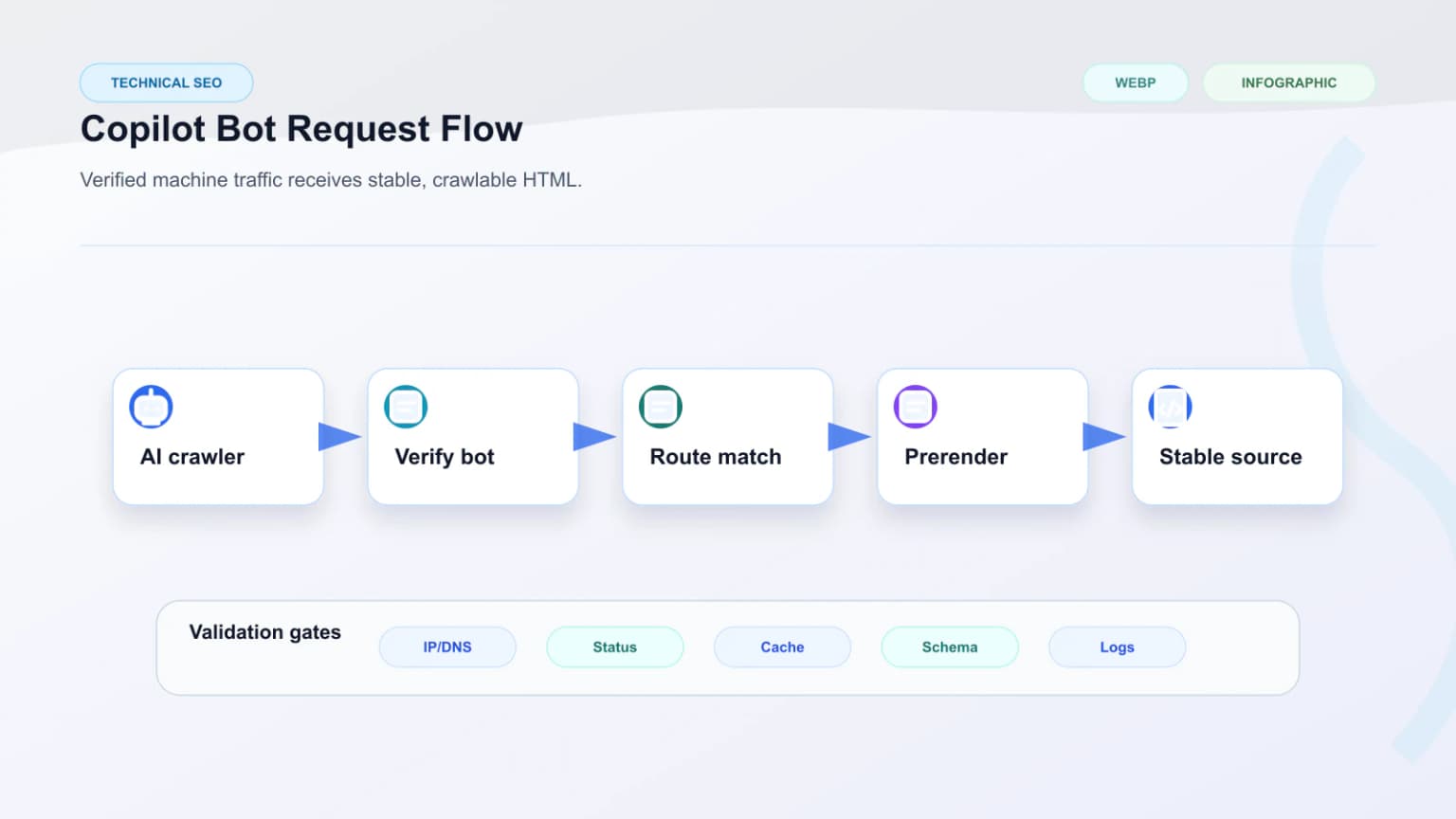
At a high level, the path works like this:
- The machine-facing request reaches the route.
- The proxy identifies bot or AI-related traffic.
- The request is routed into a prerendering environment.
- The route is rendered into stable HTML.
- Metadata, schema, headings, and body content are returned in the first response.
Why separating human and machine delivery works
This architecture is valuable because it separates human delivery from machine delivery cleanly. Human users still receive the interactive application. Machines receive a deterministic document that is easier to index, extract, and trust. If you want the implementation layer in more detail, the breakdown of prerendering middleware is a useful external reference.
For technical teams, this improves:
- first-response completeness
- extraction quality
- metadata consistency
- schema visibility
- route-level machine-facing stability
Comparing Rendering Strategies for Machine Readability
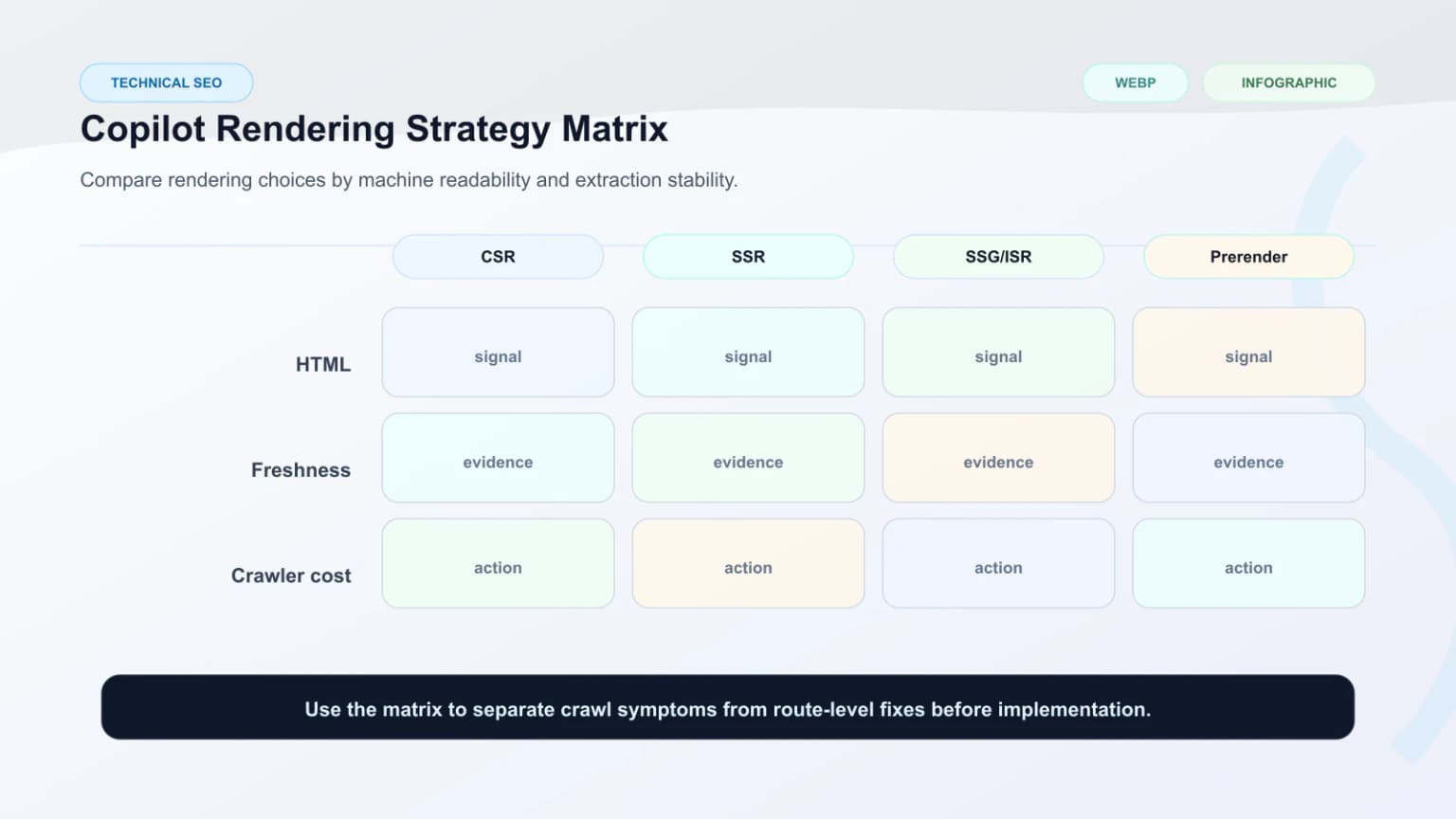
Rendering strategy is ultimately a tradeoff between extraction quality, runtime cost, and implementation complexity. The important question is always the same: what does the machine receive in the first response?
| Rendering strategy | Algorithmic extraction efficiency | Origin server compute load | Implementation complexity |
|---|---|---|---|
| Pure client-side rendering | Low, high risk of thin HTML | Low | Low |
| Native server-side rendering | High | High | High |
| Static site generation | High | Low at runtime | Medium to high |
| Proxy prerendering | High | Low to moderate on origin | Low to medium |
For many JavaScript-heavy teams, proxy prerendering is the fastest practical path because it isolates the machine-facing problem without forcing an immediate rewrite of the full delivery model. The companion article on what websites benefit from a prerendering service helps frame when that tradeoff is the right one.
Limitations and Nuances of AI Search Optimization
Optimizing for Copilot and related answer systems also introduces real tradeoffs. A route can become more visible as source material while sending fewer direct visits. Cache freshness becomes critical because stale snapshots can spread outdated facts. Personalized routes become dangerous if they are accidentally exposed to machine-facing delivery.
The major operational risks include:
- stale snapshots after content changes
- weak cache invalidation across distributed delivery layers
- dynamic pages that depend on geolocation or authentication
- personalized routes that must never be cached for bots
- gaps between machine-facing delivery telemetry and AI-answer observations
Treat AI-facing SEO as ongoing infrastructure
These risks do not make Copilot-facing SEO weaker. They simply mean the work has to be treated as infrastructure and validation, not as a one-time publishing task. Operationally, teams often use a prerender checker and schema QA in staging before pushing template changes live.
Conclusion
SEO for Microsoft Copilot is fundamentally a machine-facing delivery problem. If the route cannot expose a complete, parseable, current version of the page quickly, the AI system has weaker source material to index, retrieve, and cite. That makes deterministic HTML, structured semantics, and route-level rendering quality central to the outcome.
Prerendering is often the most practical fix because it stabilizes machine-facing output without forcing an immediate full-platform rewrite. Combined with schema, metadata discipline, and route-level monitoring, it creates the technical conditions that support stronger inclusion across Copilot and related AI discovery systems.
For engineering teams, the next step is not guessing whether the page should be visible. It is validating what the machine actually receives. The routes that win are usually the ones that are easiest to fetch, easiest to parse, and easiest to trust.
Content Cocoon
Copilot SEO Editorial Cluster
This article should connect Microsoft Copilot retrieval topics back to the parent AI visibility and prerendering services, while keeping the implementation focus on Bing-indexed discovery, deterministic HTML, and machine-readable output.
Internal Pathways
AI Search Visibility Service
The parent service for answer-engine and structured extraction readiness.
Prerendering
A related service when Copilot visibility depends on deterministic HTML delivery.
JavaScript SEO
Relevant when Copilot retrieval issues are caused by thin initial HTML or hydration-heavy routes.
SEO for Perplexity
A companion article for teams comparing AI answer-engine retrieval patterns across platforms.
External Technical References
How AI Agents Crawl Websites
A strong external reference for how retrieval bots behave under real crawling constraints.
HTTP Status Codes for Bots
Useful when debugging whether Bing and related retrieval bots are receiving stable responses.
Prerender Checker
Helpful for validating machine-facing HTML output for Copilot-facing routes.
Frequently Asked Questions
What is SEO for Microsoft Copilot?+
SEO for Microsoft Copilot is the practice of making your website easier for Bing-linked discovery and AI retrieval systems to fetch, parse, and trust through stable HTML, clear structure, and machine-readable output.
Why do single-page applications create Copilot visibility issues?+
Because important content often appears only after hydration or delayed API calls, while machine-facing retrieval works best when the first response already contains the semantic content.
How does prerendering help Copilot visibility?+
Prerendering gives machine-facing requests deterministic HTML so Copilot-related retrieval can read headings, body content, metadata, and schema without depending on fragile client-side execution.
What should technical teams validate after deployment?+
They should validate bot-facing HTML quality, schema presence, metadata consistency, snapshot freshness, and whether visibility changes correlate with route-level technical regressions.