The websites that benefit most from a prerendering service are the ones that depend on JavaScript to become meaningful after the first response. If the page ships a thin HTML shell and relies on hydration, delayed API calls, or client-side routing before useful content appears, bots and retrieval systems often see an incomplete document.
Updated for April 2026, this guide reflects the current Google JavaScript SEO basics recommendations and the AI-crawler delivery patterns we now see in production logs.
That makes prerendering a delivery-layer solution, not just a frontend preference. A prerendering service helps machine traffic receive deterministic HTML while human users keep the interactive application experience. For many teams, this is the fastest practical way to improve crawlability, metadata reliability, and AI-readability without rewriting the whole platform around a different rendering model. It usually sits at the intersection of technical SEO, JavaScript SEO, route-level AI search visibility, and the broader prerendering vs SSR vs SSG decision guide.
This article explains what a prerendering service does, how it compares with server-side rendering, which frameworks and site types benefit most, what operational risks matter, and how to evaluate alternatives when choosing a rendering layer.
What Does a Prerendering Service Actually Do?
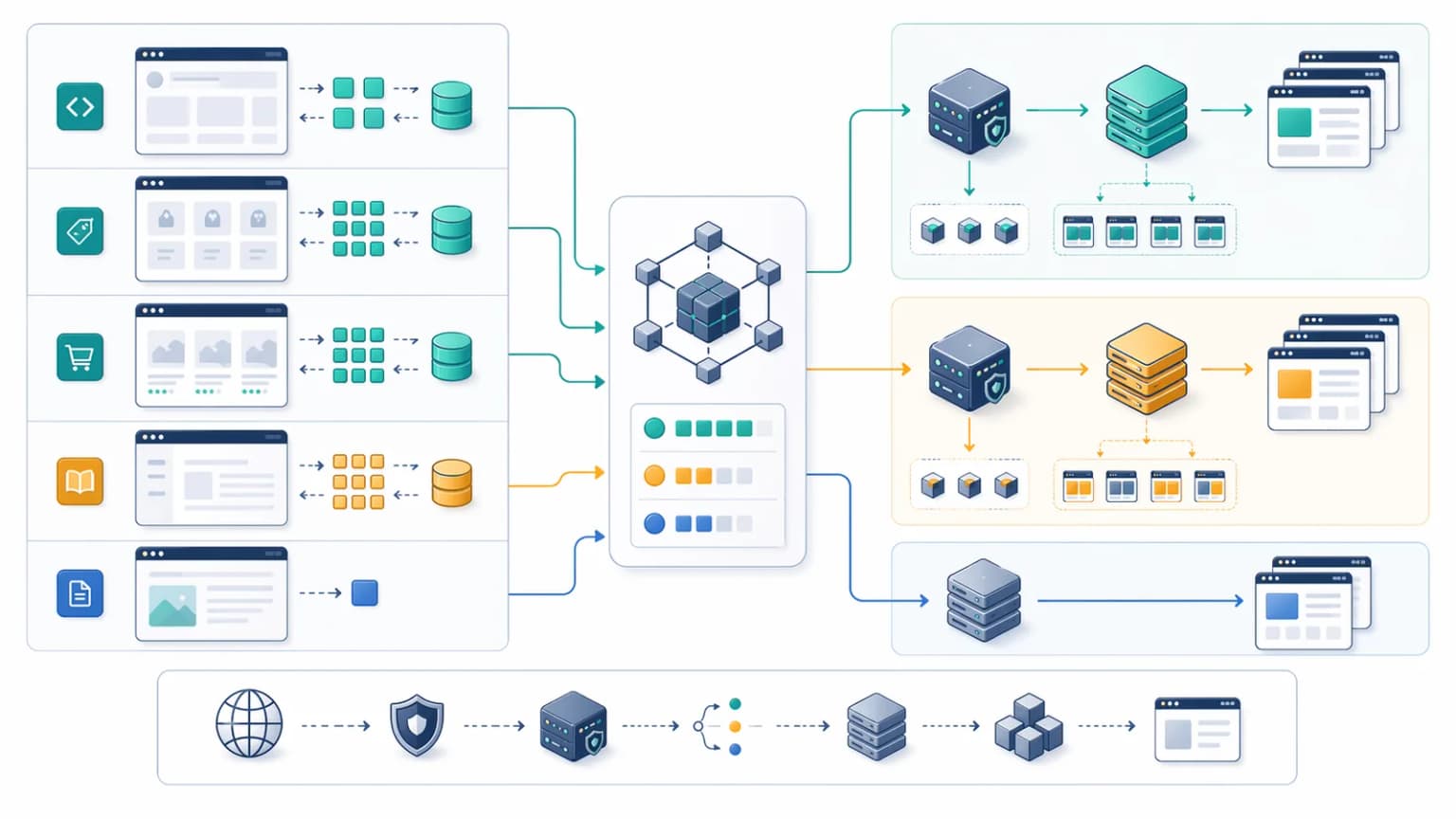
A prerendering service sits between machine traffic and the application. Instead of asking bots to execute the full frontend stack on their own, it renders the route in a controlled environment and returns serialized HTML that reflects the page state more clearly. In production, this often works best when paired with explicit bot detection and offloading bot visits logic at the reverse proxy.
At a high level, the flow works like this:
- A bot requests a route.
- Proxy logic detects that the request should use machine-friendly delivery.
- The route is rendered inside a prerendering environment.
- The service returns stable HTML, metadata, and structured content.
- Human traffic still receives the normal interactive app.
Why machines need a different delivery path than browsers
This is valuable because bots, crawlers, and AI retrieval systems are much less forgiving than browsers. They care about what exists in the first response, not about whether the app eventually becomes beautiful after hydration completes, which is the same delivery model described in Google's dynamic rendering documentation. If you need a concise technical baseline, the external primer on what prerendering is explains the machine-delivery model clearly.
Which Websites Need Prerendering the Most?
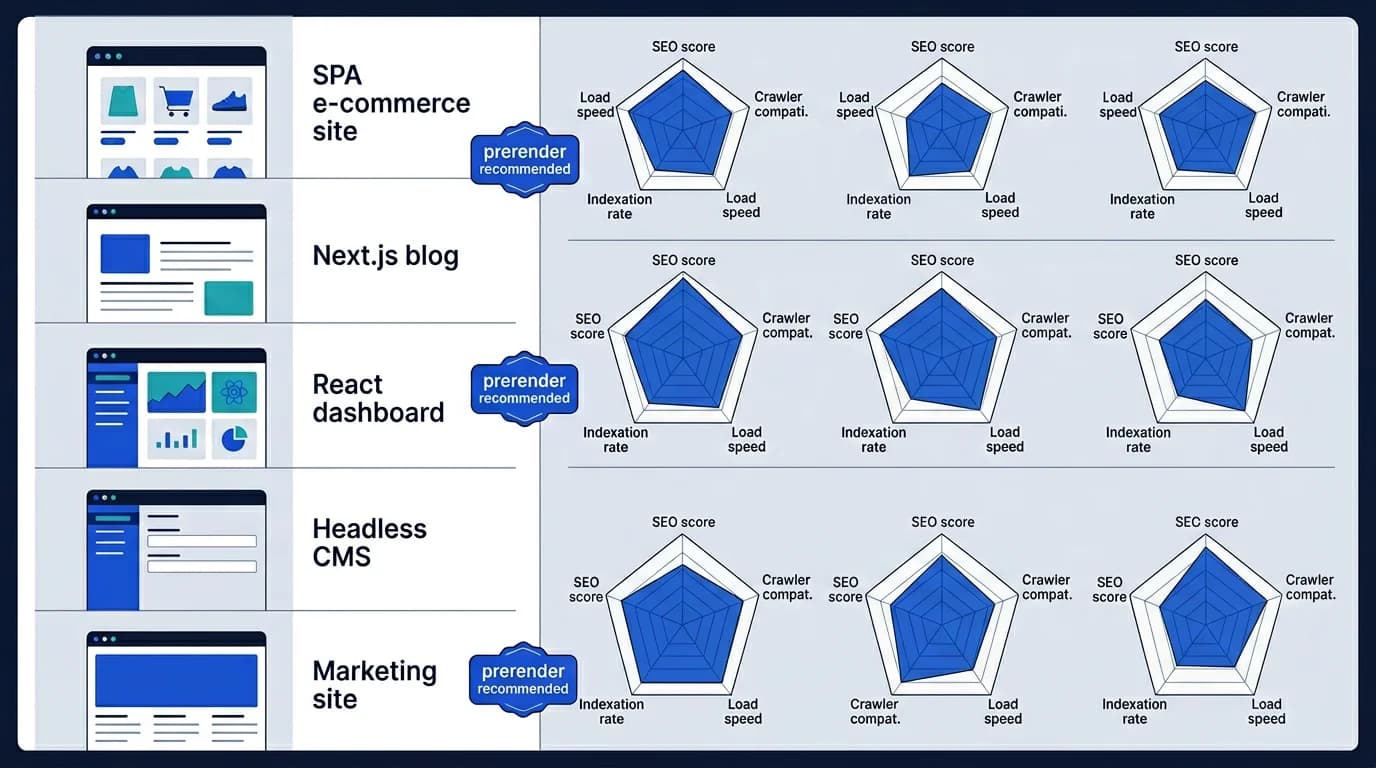
The strongest candidates are websites where the first HTML response is too thin to communicate the meaning of the page. If the route only becomes useful after JavaScript execution, prerendering can close that gap.
The most common candidates are:
- single-page applications with client-side routing
- React, Angular, Vue, or Svelte marketing sites
- e-commerce catalogs with dynamic product content
- directory or marketplace pages generated from large databases
- programmatic SEO pages with many parameterized routes
- documentation and help centers that load content asynchronously
Thin first responses are the underlying pattern
These architectures are not broken for humans. They are just risky for machine-facing delivery when the initial response carries too little semantic value. That same problem is why articles like SEO for ChatGPT and SEO for Microsoft Copilot end up focusing so heavily on first-response HTML. The taxonomy in web.dev's rendering on the web overview is a useful reference for mapping each site shape to a sensible delivery model.
The site-shape to prerendering-fit matrix below summarizes how the most common architectures we audit map to a typical rendering model, observed Core Web Vitals profile, and whether prerendering is usually the right intervention:
| Site shape | Rendering model | Typical CWV profile | Prerendering recommended? |
|---|---|---|---|
| SPA shell (React/Vue/Angular CSR) | Pure client-side rendering | Poor LCP, weak first-response HTML | Yes, high impact for crawlers and AI retrieval |
| Hybrid Next.js (RSC + client islands) | Mixed SSR/CSR, route-level boundaries | Good LCP, variable INP | Sometimes, only on routes with delayed hydration |
| Server-rendered Next.js (full SSR/ISR) | Server rendering on every request or revalidation | Good LCP, predictable TTFB | Rarely, already machine-friendly |
| Static site (Astro, Hugo, Jekyll) | Pre-built HTML at deploy time | Excellent across all metrics | No, already serves complete HTML |
| WordPress (classic theme) | Server rendering on every request | Variable, depends on plugins and theme | No, first response is already complete |
| Headless CMS frontend (Sanity, Contentful, Strapi + SPA) | Often CSR with API calls after hydration | Variable LCP, slow TTI | Yes, content is fetched too late for bots |
Prerendering vs Server-Side Rendering
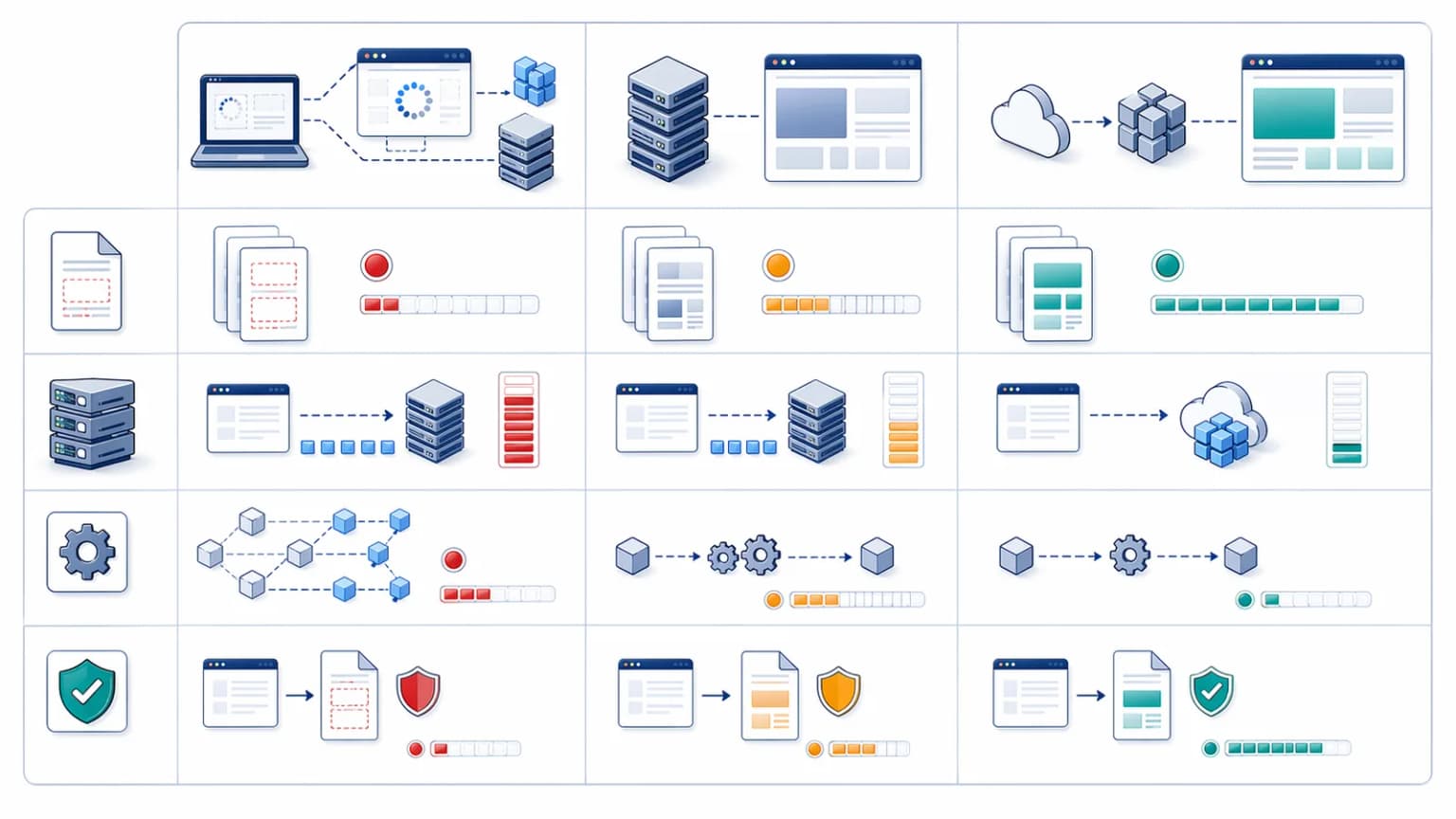
Prerendering and server-side rendering can both improve machine-readable output, but they solve the problem in different places.
| Rendering model | Where rendering happens | Origin compute load | Migration effort | Best fit |
|---|---|---|---|---|
| Client-side rendering only | In the browser | Low | Low | Apps that do not need crawler-facing visibility |
| Native SSR | On the origin for live requests | High | High | Teams already committed to server rendering |
| Prerendering service | In an external or proxy rendering layer | Low to moderate on origin | Low to medium | JavaScript-heavy sites that need machine-facing HTML quickly |
Prerendering is often the more practical option when the team wants better crawler-facing output without a full framework rewrite. SSR may be more appropriate when the platform already depends on server execution, personalization logic, or route-level runtime composition that belongs on the origin. The external comparison around SSR vs SSG and prerendering alternatives is useful when mapping those tradeoffs.
Which Frameworks Benefit Most From a Prerendering Service?
Framework-heavy sites often benefit because they concentrate meaning late in the rendering lifecycle. The UI can look complete to a human browser while the first response remains almost empty to a bot.
The usual framework candidates include:
- React SPAs with route-level data fetching
- Angular applications with client-rendered component trees
- Vue applications with dynamic route composition
- SvelteKit routes that still depend on client-side hydration for key content
- hybrid websites where some templates render well and others stay thin
Delayed semantic output is the real signal
The common pattern is not the framework name itself. The common pattern is delayed semantic output, which the Next.js rendering documentation discusses as the trade-off between server and client boundaries. If the page exposes the important content only after client-side logic runs, a prerendering service can make the route much easier for machines to trust. That is also why some teams first discover the issue while debugging what cloaking is in SEO, because weak bot-specific delivery logic can drift into compliance problems if parity is not maintained.
What Commercial Website Types Gain the Most?
The biggest gains usually appear on websites where machine visibility affects revenue directly and content changes frequently enough that delayed indexing hurts the business.
Strong commercial candidates include:
- e-commerce storefronts with large inventories
- travel, jobs, or real-estate aggregators
- SaaS marketing sites with framework-heavy landing pages
- marketplaces with parameterized category and listing pages
- media properties publishing at scale through dynamic templates
These sites often need fast inclusion, stable metadata, and clear route-level semantics. If crawlers hit an empty shell or stale render, the loss is not theoretical. It affects discoverability, traffic, and sometimes the freshness of indexed inventory.
What Risks and Limitations Come With Prerendering Services?
Prerendering is powerful, but it is not free of operational risk. Once a separate machine-facing delivery layer exists, teams need to keep it synchronized with the live application.
The main risks include:
- stale snapshots after content or inventory changes
- weak cache invalidation across distributed delivery layers
- geolocation or cookie logic that changes page meaning
- accidentally exposing authenticated or personalized pages
- partial renders when scripts or APIs fail during prerendering
Treat prerendering as production infrastructure
These issues do not make prerendering a bad choice. They just mean it needs to be treated as production infrastructure with monitoring, freshness controls, and route eligibility rules. A good operational check here is a regular prerender checker run on the routes that matter most.
How to Evaluate Prerendering Alternatives
When teams compare prerendering providers or internal alternatives, the most important question is not just whether the service can render a page once. The important question is whether it can do so reliably, quickly, and with enough operational control for a live site.
The strongest evaluation criteria are usually:
- rendering success rate on real production routes
- compatibility with modern JavaScript frameworks
- cache invalidation controls and webhook support
- response latency for machine-facing requests
- routing flexibility at the proxy layer
- debugging tools for inspecting bot-facing HTML
Match the provider to the route mix
This is where a provider comparison becomes practical. The best service for a static microsite may be very different from the best service for a large catalog or fast-changing marketplace. The implementation details in prerendering middleware explained are helpful when evaluating how much proxy flexibility you actually need. Teams running on the App Router can also review the Next.js partial prerendering documentation to see where native primitives already cover part of the use case before adding an external service.
How to Validate That a Site Truly Needs Prerendering
Not every website needs a prerendering service. Some routes are already readable enough in their current form. Before adding infrastructure, teams should validate what bots actually receive and whether the current output is already sufficient.
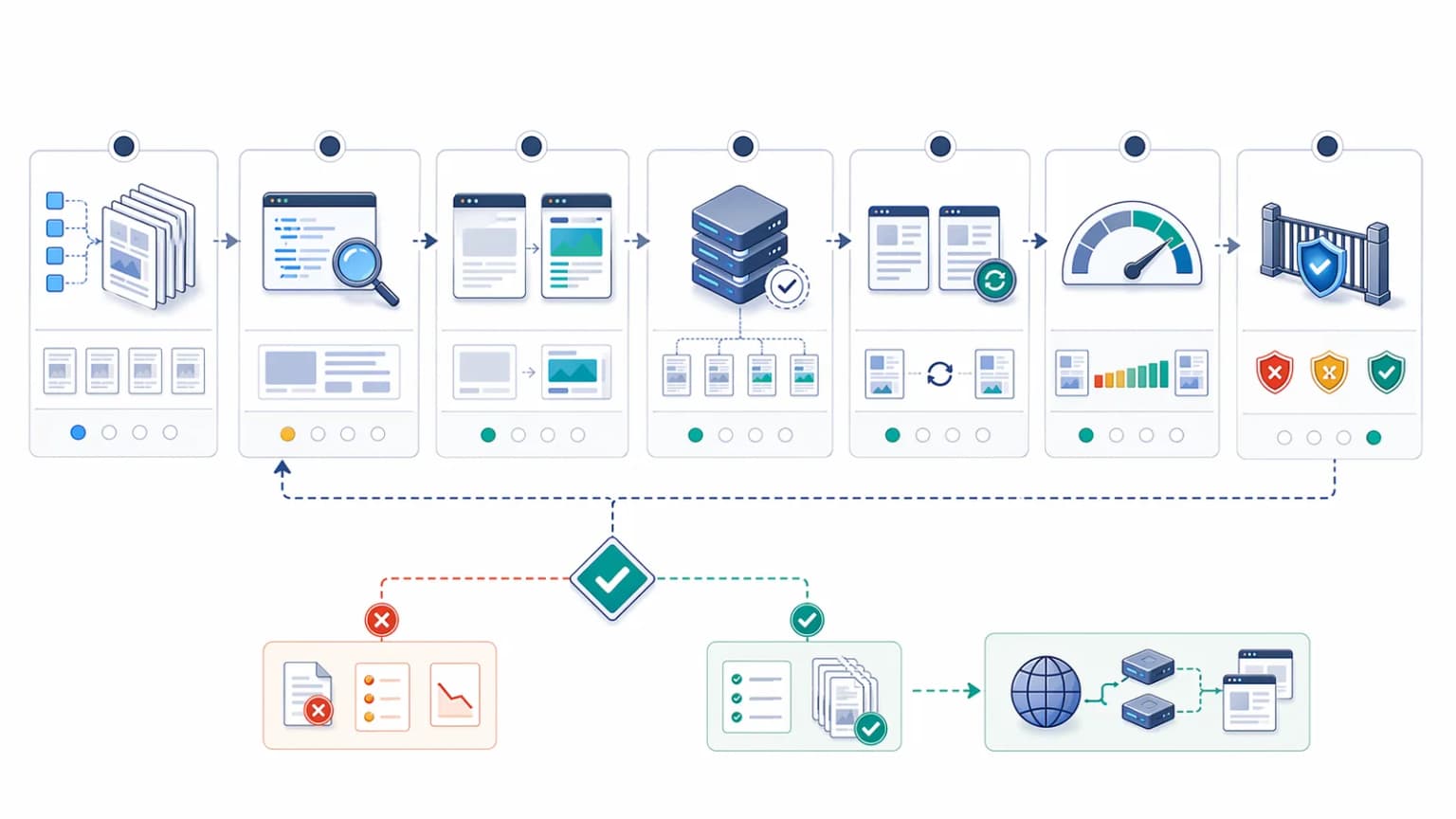
A strong validation process checks:
- raw HTML before hydration
- whether key headings and body content exist in the first response
- metadata and canonical stability
- schema visibility without client-side execution
- differences between bot-facing output and the final human-visible state
When prerendering changes the outcome
If the route already ships complete, stable HTML, prerendering may not add much. If it ships a shell and depends on delayed execution, prerendering often becomes one of the fastest ways to improve machine-facing quality. Teams usually confirm that difference with a view as bot vs prerender tool before rollout.
A first-response HTML completeness check can be run from any shell by fetching the page with the canonical Googlebot User-Agent and grepping for the three signals that matter most, title, canonical, and JSON-LD structured data:
curl -s -A "Mozilla/5.0 (compatible; Googlebot/2.1; +http://www.google.com/bot.html)" \
  -L https://example.com/ \
  | grep -E '<title>|rel="canonical"|application/ld\+json'
If the title tag is missing, the canonical tag is absent, or no application/ld+json block appears in the raw response, the route is depending on client-side execution to expose its meaning, and a prerendering service is likely the fastest way to close that gap. The same diagnostic logic can be cross-checked against Google's fix search-related JavaScript problems guide when the result is borderline.
Conclusion
The websites that benefit most from a prerendering service are the ones where JavaScript delays or obscures the semantic value of the page for bots. Single-page applications, large catalogs, programmatic template systems, and dynamic commercial sites are the most common examples.
For many teams, prerendering is the practical middle path between doing nothing and rebuilding the entire platform around server rendering. It improves machine-facing HTML, supports stronger crawlability, and gives technical SEO work a more reliable delivery foundation.
The real decision should come from validation. Look at the bot-facing response, compare it to the fully rendered route, and then decide whether a prerendering service is solving a real delivery problem on the pages that matter.
Content Cocoon
Prerendering Service Editorial Cluster
This article should connect prerender-service buying intent back to the core rendering and audit paths, while helping teams compare architecture fit, SSR tradeoffs, and operational rollout needs.
Internal Pathways
Prerendering
The core service page for teams evaluating deterministic HTML delivery for bots and AI crawlers.
JavaScript SEO
Relevant when the need for a prerendering service starts with thin HTML and weak crawler-facing rendering.
Technical SEO Audit
Useful when rendering issues are part of a broader crawlability, indexation, and implementation problem set.
Prerendering for Technical SEO
A companion article covering the broader role of prerendering in search and AI visibility.
External Technical References
What Is Prerendering
A concise external reference explaining the delivery model behind prerendering services.
Prerendering Middleware Explained
Useful when evaluating how proxy routing and rendering clusters actually work in production.
Prerender Checker
Helpful for validating whether prerendered HTML is being served correctly to machines.
Bridge CDN, an edge platform for search-dependent sites
Relevant for teams weighing a delivery platform rather than a prerender add-on. In development, waitlist open.
Frequently Asked Questions
What websites benefit most from a prerendering service?+
Websites that depend on JavaScript to expose their core content, such as SPAs, dynamic catalogs, marketplaces, and framework-heavy marketing sites, usually benefit the most.
Is prerendering better than server-side rendering?+
Not universally. Prerendering is often better when teams need machine-facing HTML quickly without a full platform rewrite, while SSR can be a stronger fit when server execution is already central to the application architecture.
How do teams know whether they really need prerendering?+
They should inspect the raw bot-facing HTML, confirm whether key headings, body content, metadata, and schema are present in the first response, and compare that output with the final rendered page state.
What are the biggest prerendering risks?+
The biggest risks are stale snapshots, weak cache invalidation, partial renders, and accidentally exposing personalized or authenticated content to crawler-facing delivery.