If your team is trying to improve brand inclusion across ChatGPT, Gemini, Perplexity, and other answer engines, the first technical question is not prompt wording. It is whether those systems can fetch a stable, machine-readable version of your content in the first place. An AI visibility tool helps you measure how often your brand, product, or proprietary information appears inside generated answers, but measurement alone is not enough. The underlying website architecture has to support extraction, citation, and repeatable retrieval. Updated for April 2026, this guide reflects the current behavior of major answer-engine crawlers and how visibility platforms now correlate inclusion with crawler-facing delivery quality.
Many modern websites still rely on client-side rendering, delayed hydration, and fragmented API requests to assemble the page after the initial response. That may be acceptable for human users with a full browser session, but it is often a weak foundation for AI search visibility. Large language model crawlers, including OpenAI's documented bots like GPTBot and OAI-SearchBot, PerplexityBot, and Bingbot used by Copilot, operate under resource constraints, aggressive timeouts, and simplified fetch strategies. When those systems receive thin HTML or incomplete semantic output, the domain becomes much harder to cite consistently.
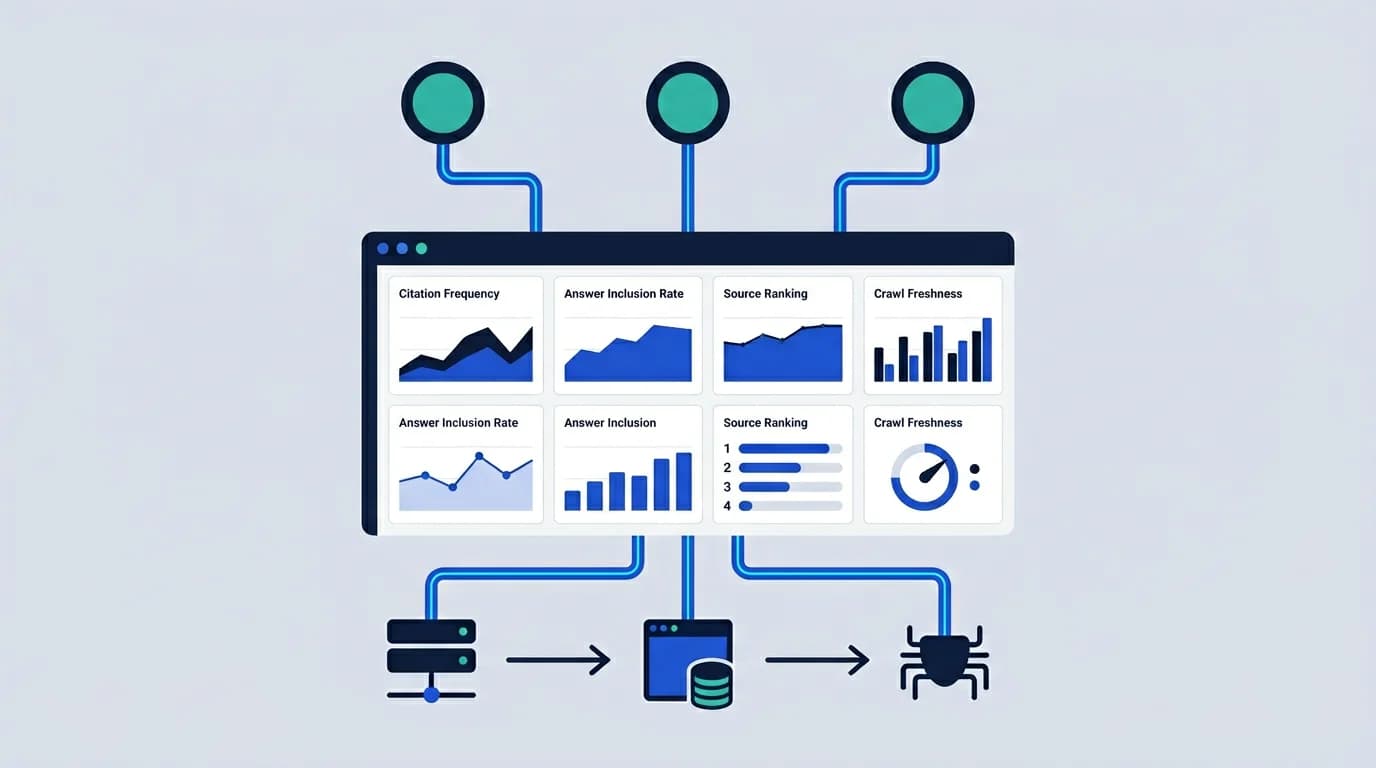
This is where prerendering becomes a practical infrastructure decision rather than an abstract SEO tactic. A prerendering layer can deliver deterministic HTML to machines while preserving the product experience for humans. Used correctly, that architecture improves extraction reliability, structured data for AI visibility, and the consistency of entity signals that AI visibility tools are trying to measure.
What an AI Visibility Tool Actually Measures
An AI visibility tool is a monitoring system that evaluates how often a brand, domain, product, or data point appears inside generated responses across answer engines. Instead of looking only at classic rankings, it tracks citation frequency, semantic association, response inclusion, and sometimes the sentiment or accuracy of what the model says about the brand.
How AI visibility tools differ from rank trackers
That makes it fundamentally different from a traditional rank tracker. A rank tracker is built around visible positions inside search engine results. An AI visibility platform is built around extraction and synthesis. The system prompts large language models, inspects the response, and determines whether the model relied on your domain, ignored your content, or cited a competitor as the primary source of truth.
Why AI visibility is a delivery question, not just content
For engineering and technical SEO teams, this matters because AI visibility is not just a content question. It is also a delivery question. If the site does not expose stable, well-structured HTML, the answer engine may never ingest the most important facts in the first place. The monitoring layer then reports weak inclusion, but the root cause is often architectural rather than editorial.
In practice, the best AI visibility tools help teams answer questions like these:
- Does the model cite our domain for high-value prompts?
- Is our brand associated with the right commercial and technical concepts?
- Are answer engines extracting current product and service information?
- Are structured data and entity signals actually visible to crawlers?
- Which routes or templates are failing to surface machine-readable content?
That is why AI visibility should be treated as part of technical search infrastructure, not as a disconnected reporting layer. Teams usually get the most value when this measurement layer is paired with a dedicated AI search visibility service that can validate what bots actually receive. In many organizations, that work starts from the same crawlability and rendering investigations covered by a technical SEO audit.
Why JavaScript Rendering Still Breaks AI Search Visibility
Client-side JavaScript can still destroy AI search visibility when essential content only appears after hydration, route transitions, or delayed API calls. A human visitor may eventually see the right interface, but an automated extraction system may not wait long enough to reconstruct the page.
Why crawlers skip expensive client-side execution
Large-scale crawlers optimize for throughput. They need to process huge numbers of URLs quickly, which means they frequently avoid expensive browser execution whenever possible. If a route requires full client-side rendering to expose text, schema, pricing details, product descriptions, FAQ content, or internal links, the crawler may capture only a partial shell. That weakens indexation and lowers the chance that the page becomes a reliable source for generative systems.
This gap becomes especially visible on:
- JavaScript-heavy marketing sites
- single-page applications
- hybrid frameworks with inconsistent route rendering
- template-driven marketplaces
- large content systems with delayed data hydration
The result is a recurring technical pattern: the page looks complete in the browser, but answer engines and crawler-based systems ingest an incomplete version of the document. If your AI visibility tool keeps showing weak citation frequency or low extraction coverage, it is often worth checking whether the initial HTML is doing enough work before the client runtime takes over. That is also why teams working through JavaScript SEO issues often discover that visibility loss is really a rendering-delivery problem.
How Prerendering Changes the Extraction Layer
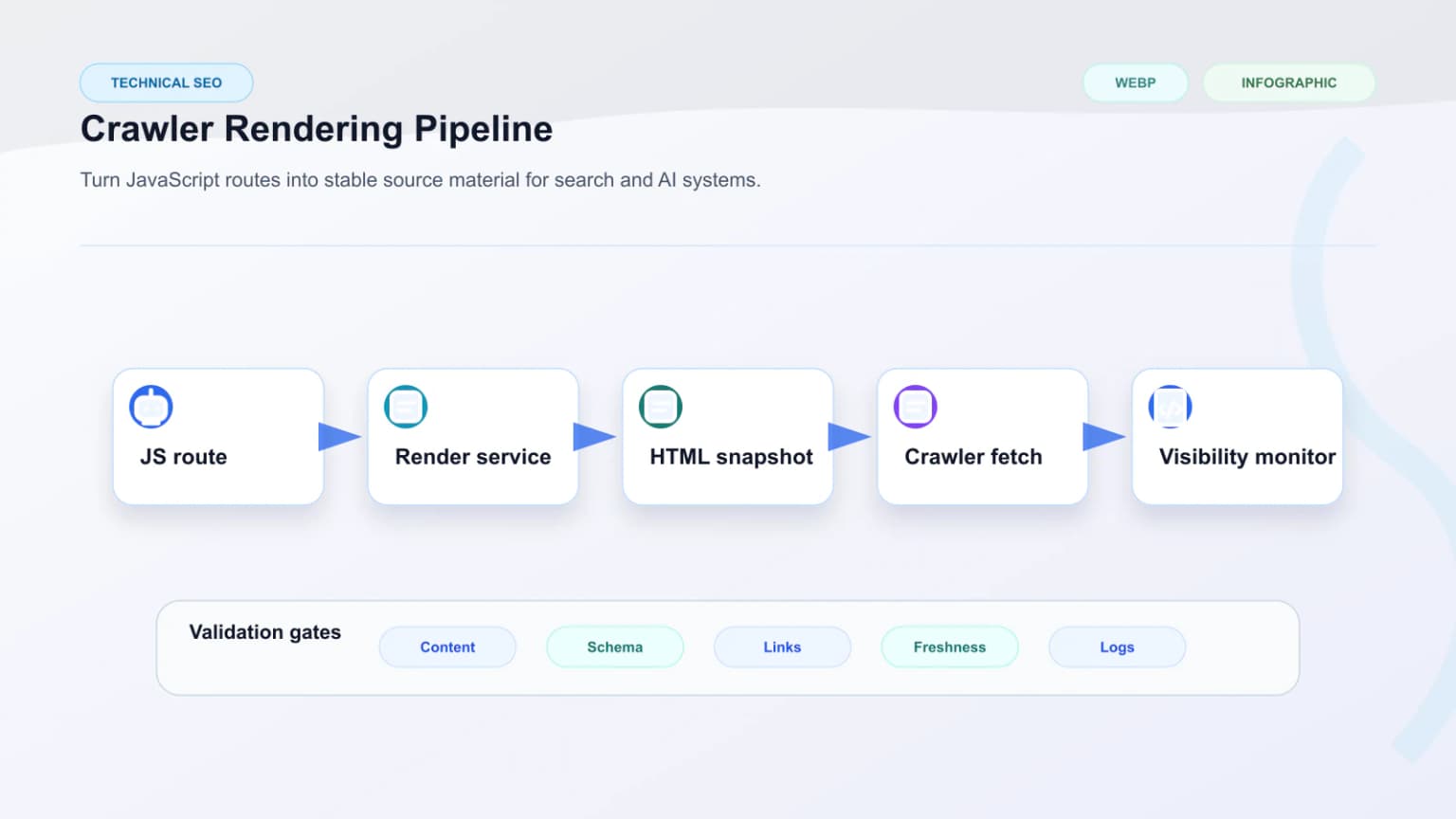
Prerendering solves a very specific infrastructure problem. Instead of making every automated system execute the application on its own, it intercepts known crawler traffic and serves a fully rendered HTML snapshot. That snapshot contains the content, structure, metadata, and schema the machine needs at fetch time.
At a practical level, the flow looks like this:
- A crawler or AI-facing extraction bot requests a route.
- The reverse proxy identifies that request as machine traffic.
- The request is passed to a prerendering layer or rendering cluster.
- The route is compiled and serialized into deterministic HTML.
- The bot receives the finished document rather than the raw client shell.
This dramatically improves extraction reliability for AI search visibility because the answer engine no longer has to guess how the page should look after hydration. It gets the finished output immediately.
Architectural benefits of a prerendering middleware
For teams working with Ostr.io or a similar prerendering middleware, the architectural benefit is twofold. First, the rendering burden is shifted away from the origin for bot traffic. Second, the machine-facing version of the page becomes more predictable, which improves crawl consistency for both classic search engines and AI-powered retrieval systems.
This is also why prerendering is often a better short-term decision than a full rendering rewrite. Not every team can replatform the entire frontend around a new rendering model. But many teams can introduce a proxy-level prerendering layer that stabilizes the search-facing output of their highest-value routes. If you need a second technical reference, the guide on what prerendering is explains the machine-facing delivery model in more detail, and the article on what websites benefit from a prerendering service helps decide where that rollout is actually justified.
What the Best AI Visibility Tool Should Include
Not all AI visibility tools are equally useful. The best platforms do more than count citations. They connect visibility signals to the technical conditions that made those signals possible or impossible.
A strong AI visibility tool should include:
- prompt-based monitoring across major answer engines
- citation and inclusion tracking at the domain and entity level
- context analysis to determine whether the mention is relevant and accurate
- change detection for brand presence over time
- support for localized or market-specific testing
- reporting that can be correlated with technical delivery changes
How visibility tools should help isolate operational failures
For enterprise teams, the most valuable systems also help isolate operational failures. If a prerendering route times out, if a canonical becomes unstable, if a key route starts shipping blank HTML to bots, or if schema disappears from a template, the visibility tool should make that drop diagnosable.
That is the real difference between useful AI visibility reporting and vanity reporting. The tool has to support action, not just observation.
Traditional Rank Tracking vs AI Visibility Monitoring
The shift from classic search to answer engines changes what success looks like. Rankings still matter, but they are no longer the only signal that determines whether your information is used.
| Capability | Traditional Rank Tracker | AI Visibility Tool |
|---|---|---|
| Primary target | Search result position | Citation and inclusion inside generated answers |
| Data source | Visual SERP observation | LLM and answer-engine response analysis |
| Success signal | Click potential | Presence, attribution, and semantic relevance |
| Rendering assumption | Deferred rendering may still work | Stable HTML must be available immediately |
| Technical dependency | URL indexing and ranking | Extractable content, schema, entities, deterministic output |
This comparison is why technical teams should not treat AI visibility as a replacement for technical SEO. It is an extension of it. If the technical foundation is weak, the answer-engine layer has less reliable material to cite. You can see the same dependency clearly in adjacent workflows like SEO for ChatGPT and SEO for Microsoft Copilot.
Structuring Data for Algorithmic Extraction
Even with prerendering in place, the content still needs to be structured for machines. Answer engines benefit from clear entity mapping, stable page semantics, and explicit relationships between products, organizations, services, and questions.
That usually means tightening the following layers:
- JSON-LD markup for organization, service, article, FAQ, and breadcrumb entities
- stable heading hierarchy
- clear internal linking between related topics
- machine-readable tables for comparisons and specifications
- route-level metadata that aligns with the actual page purpose
- explicit canonical and Open Graph consistency
Why prerendered HTML strengthens entity clarity
When these layers are visible inside the prerendered HTML, answer engines have a cleaner path to understanding the content. They do not have to infer as much from loose prose or fragmented JavaScript payloads. This is one reason structured data remains relevant for AI search visibility: it makes the page easier to extract, compare, and cite. For implementation QA, teams often validate those entity layers with a JSON-LD validator before shipping template changes.
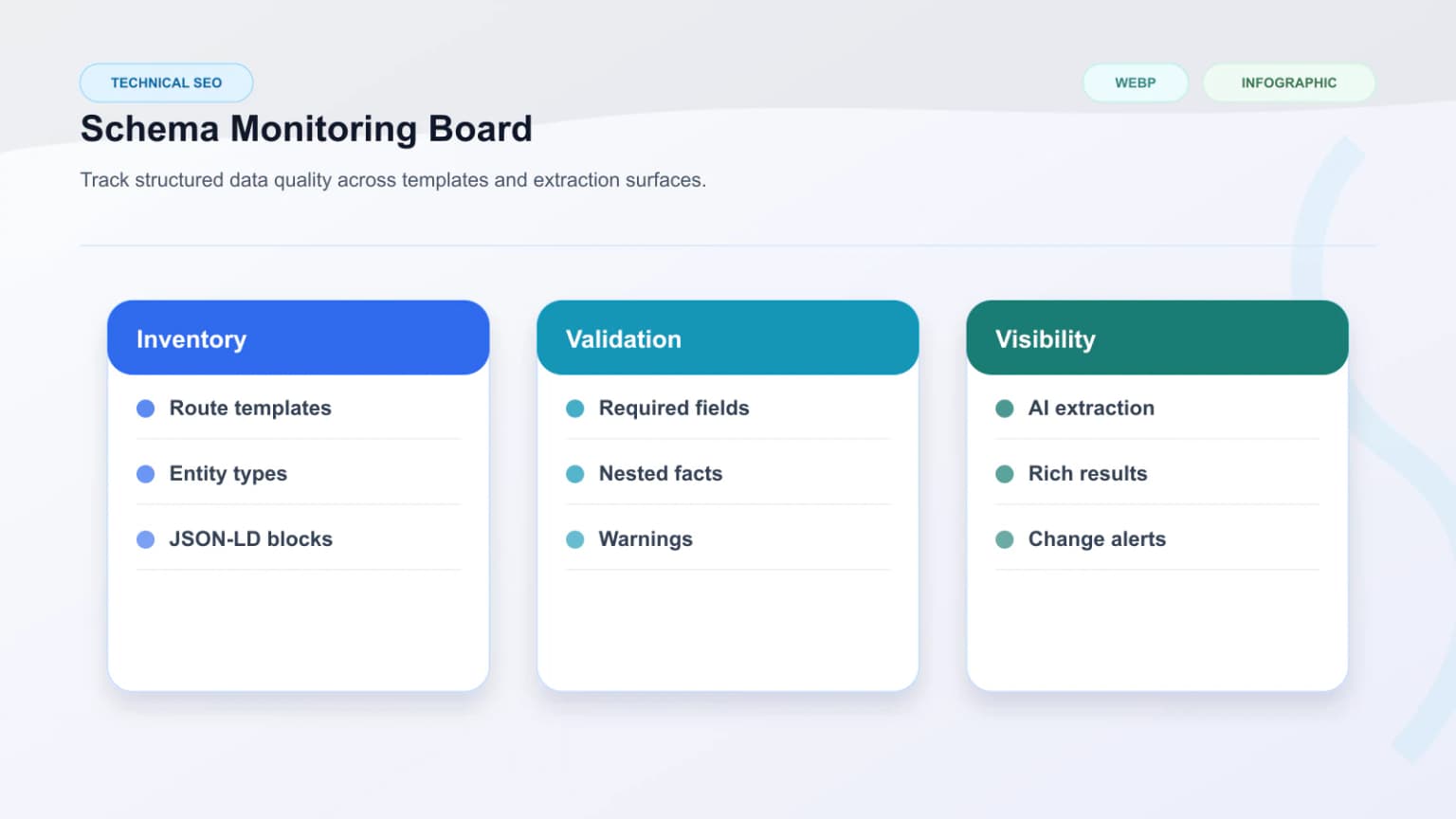
For technical teams, the practical takeaway is simple. If an AI visibility tool reports weak inclusion, do not look only at prompts and brand mentions. Inspect the crawler-facing HTML, the schema graph, the route output, and the delivery path that answer engines actually see.
Enterprise Monitoring: Connect Visibility Data to Server Logs
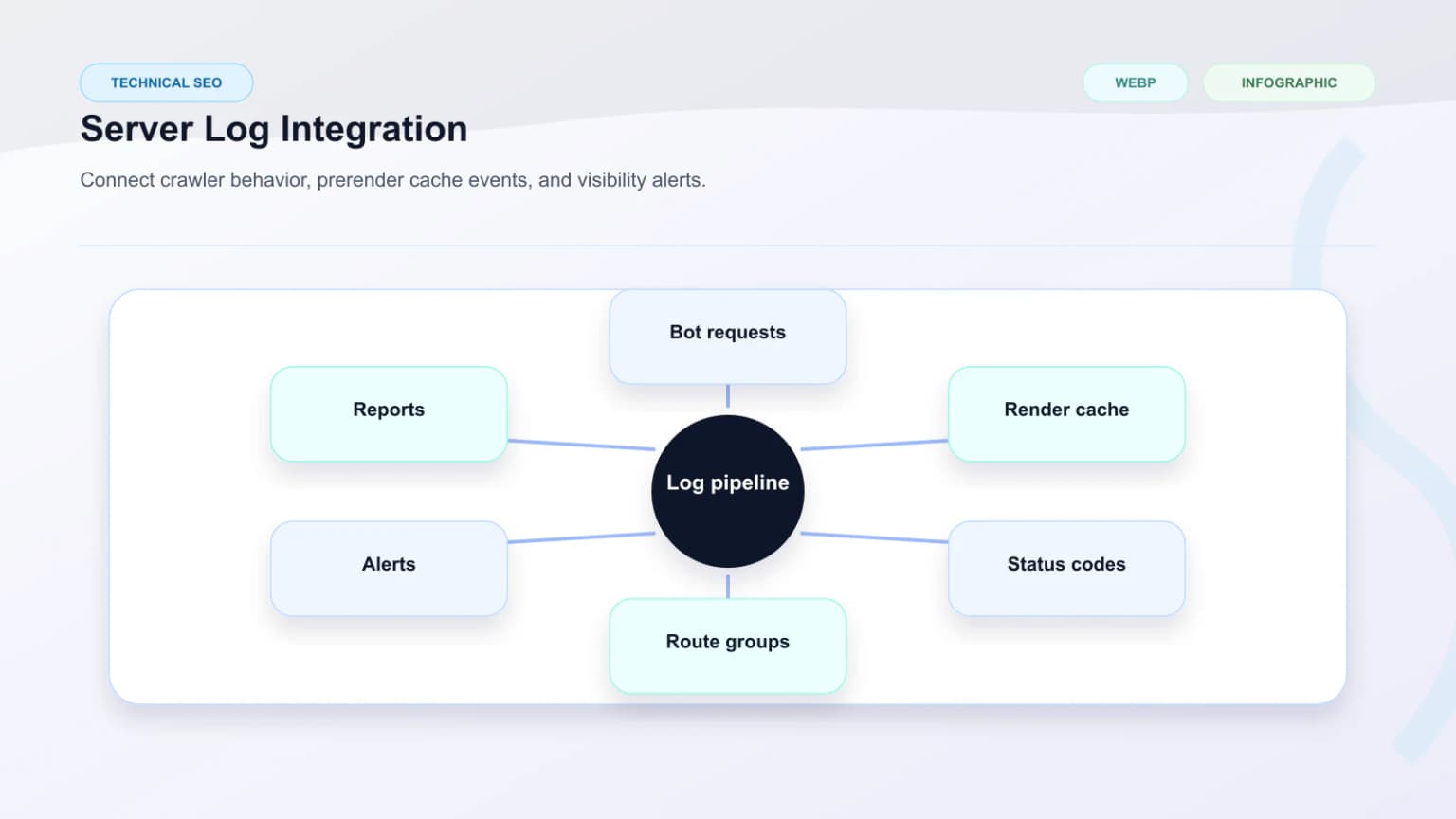
One of the most useful enterprise patterns is linking AI visibility reporting to server-side delivery and monitoring systems. This is where the visibility tool becomes genuinely operational.
When a platform is integrated with server logs, reverse proxy analytics, and rendering-layer monitoring, teams can answer questions like:
- Did the bot receive a 200 response or a timeout?
- Was the prerendered snapshot fresh or stale?
- Did the route return complete schema payloads?
- Was the request served by the correct rendering path?
- Did extraction drop after a deployment, cache change, or proxy rule update?
When server-log correlation becomes essential
This is especially important when working across multilingual routes, large URL inventories, or multiple deployment layers. Without this correlation, AI visibility scores can look abstract. With it, the metrics become traceable to concrete technical causes.
The most mature workflow usually looks like this:
- Monitor answer-engine inclusion for strategic prompts.
- Correlate visibility changes with bot-access logs and prerendering responses.
- Validate that the rendered HTML still includes the expected entities and content.
- Investigate cache invalidation, route output, or timeout failures.
- Re-test the affected prompts after the technical fix.
That closed loop is what turns AI visibility into an engineering signal instead of a marketing-only dashboard.
Limitations Teams Should Understand
AI visibility is not perfectly deterministic. Different models may cite different sources. Prompt wording matters. Caches change. Some systems blend internal knowledge with retrieved web data. That means no single AI visibility tool should be treated as absolute truth.
There are also technical nuances that can create misleading results:
- stale prerendered output after content updates
- geolocation-dependent pages that do not render consistently for bots
- authentication boundaries that hide key content
- missing cache invalidation after pricing or inventory changes
- unstable route-level metadata across deployments
These issues do not make AI visibility monitoring useless. They simply mean the monitoring layer has to be interpreted alongside the delivery layer. If a brand disappears from citations, the answer is not always editorial weakness. Sometimes the route simply stopped delivering clean machine-readable output.
Why Ostr.io Fits This Architecture
Ostr.io is relevant in this workflow because it helps bridge the gap between modern frontend delivery and crawler requirements. Instead of asking answer engines to execute the full application reliably, it enables a machine-facing path that returns complete HTML, protects the origin from unnecessary rendering load, and keeps high-value routes more extractable.
Why crawler stability also helps answer-engine extraction
For technical SEO and AI visibility work, that matters because the same stability that supports search engine crawling also supports answer-engine extraction. If your content, schema, and entity relationships are consistently visible in the first response, the site becomes easier to cite and trust.
The strongest implementation pattern is usually:
- detect verified bot traffic at the proxy layer
- prerender only the routes where search-facing HTML matters most
- bypass static assets and API endpoints that do not need rendering
- keep cache duration aligned with content freshness requirements
- validate the final HTML with both crawler tests and visibility monitoring
This gives the team a controlled path to improve AI search visibility without forcing a full frontend rewrite.
Conclusion
An AI visibility tool can tell you whether answer engines are using your content, but it cannot fix a weak delivery architecture by itself. If the site exposes incomplete HTML, hides critical information behind hydration, or ships unstable schema to crawlers, the monitoring layer will only report the symptoms.
The durable solution is to combine measurement with infrastructure. That means deterministic HTML delivery, clean schema implementation, stable metadata, and route-level monitoring that confirms what bots actually receive. Prerendering is often the most practical way to create that stability on JavaScript-heavy websites.
For teams working in technical SEO, the opportunity is clear. AI search visibility is not just a new reporting category. It is a new reason to make crawler-facing output more reliable, more structured, and more operationally measurable.
Content Cocoon
AI Visibility Editorial Cluster
This article lives under the AI visibility and prerendering branch. The best links here connect measurement back to the technical implementation pages and to a few external references about AI crawlers and structured data validation.
Internal Pathways
AI Search Visibility Service
The main service page for answer-engine visibility, schema, and extraction-readiness work.
Prerendering
A related service when AI visibility depends on reliable crawler-facing HTML.
SEO for ChatGPT
A companion article focused on ChatGPT retrieval, OAI-SearchBot, and prerendered output.
External Technical References
How AI Agents Crawl Websites
A useful external reference for understanding answer-engine crawling patterns.
Fix SEO Fundamentals for AI Overviews
Helpful when grounding answer-engine strategy in strong technical SEO fundamentals.
JSON-LD Validator
Useful for validating structured data that supports machine-readable extraction.
Frequently Asked Questions
What is an AI visibility tool used for?+
An AI visibility tool measures how often your brand, domain, product, or proprietary data appears inside generated answers across systems like ChatGPT, Gemini, and Perplexity.
Why does prerendering matter for AI search visibility?+
Prerendering gives crawlers and answer-engine bots stable HTML at fetch time, which makes content, schema, and entity relationships easier to extract and cite reliably.
Can JavaScript-heavy websites still compete in AI search?+
Yes, but they usually need stronger crawler-facing delivery. If key content depends on hydration or delayed API calls, prerendering or a more deterministic rendering path often becomes necessary.
What should the best AI visibility tool include?+
It should track inclusion across major answer engines, monitor citation quality, support prompt-based testing, and help teams connect visibility changes to technical delivery issues.