International SEO becomes fragile when multilingual and multi-market sites treat locale handling as a frontend detail instead of as a search architecture problem. Search engines need to understand which version of a page is intended for which language and market, how those versions relate to one another, and which URL is canonical within each market path.
That is why international SEO is not just about adding hreflang tags. It is about route design, canonical discipline, alternate mapping, and machine-facing consistency across locales, all sitting on top of the broader site taxonomy and URL architecture for large websites. On modern frameworks, these systems often fail when locale defaults are resolved too late, alternates are generated inconsistently, or the first response does not match the intended market version.
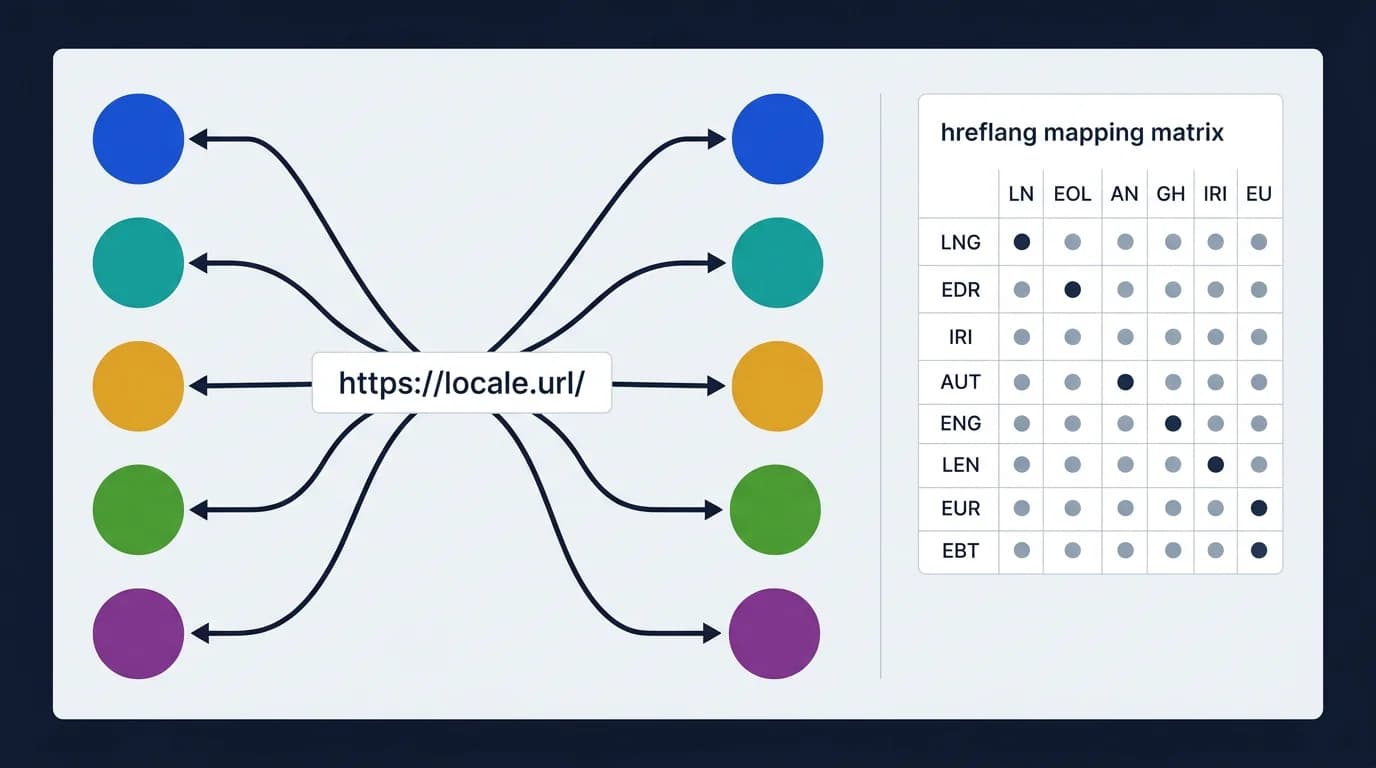
This guide explains how hreflang should fit into multilingual route architecture, which implementation patterns create the most common failures, and how technical teams can validate market-aware pages without turning locale systems into duplication problems. Updated for April 2026, the patterns below reflect what we still see breaking across multilingual Next.js, Nuxt, and SPA deployments.
International SEO is a route-mapping problem first
The core task of international SEO is to map equivalent pages across languages or markets without confusing them for duplicates.
That means search systems need to understand, as Google explains in its localized versions and hreflang documentation:
- which URL is meant for which locale
- which alternate URLs represent the same page intent in other locales
- which canonical belongs to each locale version
- whether a fallback page exists for unspecified users
When those relationships are unclear, even correct content can underperform because the route system itself is ambiguous.
Hreflang only works when alternates are real equivalents
One of the most common mistakes is linking together pages that are not true equivalents. Hreflang is strongest when each mapped page serves the same core purpose but for a different language or market, which aligns with Google's broader guidance on managing multi-regional and multilingual sites.
Good alternate sets usually share:
- the same primary intent
- comparable page type
- aligned core content purpose
- one market-specific canonical each
Weak alternate sets often mix:
- different product availability
- different template intent
- one market page with another market category page
- partially translated or thin placeholder content
If the pages are not real equivalents, hreflang becomes less trustworthy.
Canonicals and hreflang must agree
Search engines can handle complex alternate systems, but they still need a stable preferred URL for each locale version. That means each page should usually canonicalize to itself within its own market version while using hreflang to point to its valid alternates.
Problems usually appear when:
- multiple locales canonicalize to one global page
- locale pages point canonical to the wrong market
- alternates exist but canonicals collapse them away
- framework defaults overwrite the locale-specific URL
Why preferred URL stability underpins alternate trust
This is why international SEO overlaps directly with canonical issues on JavaScript websites. If the preferred URL logic is unstable, alternate mapping cannot stay trustworthy.
Modern frameworks often break locale intent in the first response
On modern frameworks, locale handling is often resolved through middleware, headers, cookies, browser preferences, or client-side routing. That flexibility can create SEO problems when the first machine-facing response does not represent the intended locale or market state.
Common failure patterns include:
- locale redirects based only on browser behavior
- server output using one locale while hydration switches to another
- default market content appearing on every route before client correction
- canonical and hreflang values assembled after hydration
- market-specific metadata injected too late
How locale bugs create search ambiguity
These problems are not just localization bugs. They create search ambiguity across route families.
Choose a locale architecture before implementation scales
International SEO gets easier when the site defines one clear URL model early. The important thing is not that one global model is always superior. The important thing is that the team uses one consistent model and keeps all technical signals aligned with it.
Common patterns include:
- country-code top-level domains
- subdomains by locale or market
- subdirectories by locale or market
- parameter-based locale states
Why parameter-based locale routing is usually the weakest choice
For most modern SEO systems, parameter-based locale routing is usually the weakest because it often creates duplicate-risk states and unstable preferred URLs. Clear subdirectory or domain-level patterns are generally easier to map, canonicalize, and validate.
x-default should clarify fallback intent, not replace missing mapping
x-default is useful when the site has a genuine fallback route for users who do not match a more specific language or market page. It is not a shortcut for an incomplete alternate set.
Good use of x-default usually means:
- one fallback page per alternate cluster
- a clear purpose for users without a market-specific match
- canonical and hreflang values that still remain consistent
Weak use often means:
- pointing every market cluster to the same unrelated homepage
- using
x-defaultbecause locale coverage is incomplete - substituting it for proper alternate pairs
x-default should reduce ambiguity, not mask missing architecture.
Market differences need enough unique value to deserve separate URLs
Some multilingual systems work with almost identical content across regions. Others legitimately need different pricing, offers, regulations, product sets, or support flows. The team should be honest about whether a market deserves a separate route.
Separate market URLs are usually justified when there are meaningful differences in:
- language
- currency or pricing
- product availability
- legal or regulatory content
- market-specific buyer expectations
When alternate sets look like duplicate clusters
If those differences are trivial, the site may be creating alternate sets that search engines interpret as duplicate clusters rather than as useful market variants. This is where international SEO can drift into duplicate content at scale.
Internal links and sitemaps should reinforce locale structure
Multilingual sites often focus heavily on head tags while neglecting supporting signals. Internal links and sitemaps still matter because they help crawlers understand the relationship and prominence of each locale path.
Healthy systems usually:
- link to locale equivalents intentionally
- keep locale navigation crawlable and understandable
- segment sitemaps by locale or market where useful
- expose only canonical locale URLs in each sitemap
This keeps the alternate architecture legible instead of burying it entirely in head markup.
Rendering parity matters for locale-specific pages
If the raw HTML says one locale, the hydrated UI shows another, and the metadata reflects a third, the route becomes much harder to trust.
That is why international SEO also overlaps with Next.js rendering decisions for SEO and AI visibility. Teams should validate:
- raw HTML locale state
- self-canonical value
- hreflang block output
- alternate page availability
- hydrated route parity after client initialization
Why framework defaults are not enough
Locale systems fail most often when everyone assumes the framework will keep these layers aligned automatically.
A practical validation workflow for hreflang
The safest hreflang validation is route-based, not just template-based.
For each important locale family:
- Check that every locale page returns the intended market content in raw HTML.
- Confirm that each page self-canonicalizes within its own locale version.
- Validate that hreflang references point only to real equivalents.
- Review whether an
x-defaultpage exists and makes sense. - Confirm sitemap and internal-link support for those canonical locale routes.
Useful support here includes a crawler checker, a view as bot vs prerender tool, and an extract sitemap tool.
Common international SEO mistakes on modern stacks
The most common mistakes are:
- generating hreflang tags for pages that are not true equivalents
- collapsing all locales into one canonical
- resolving locale intent only after hydration
- using parameter states instead of stable locale routes
- forgetting to support locale structure through internal links and sitemaps
- creating separate market pages without meaningful differentiation
These mistakes usually come from treating international SEO as a metadata task instead of as route architecture.
Conclusion
International SEO works best when locale and market pages are treated as intentional alternate systems with stable canonicals, clear route patterns, and machine-facing consistency from the first response onward.
Hreflang is important, but it is only one layer. The strongest results come when canonical logic, rendering behavior, sitemap exposure, and internal-link structure all agree on which market version each page represents and how that version relates to its real equivalents.
Content Cocoon
International SEO and Hreflang Cluster
This article should connect hreflang and international route mapping back to canonical policy, rendering stability, and the broader technical SEO systems that determine whether multilingual and multi-market pages are interpreted as intentional alternates instead of duplicates.
Internal Pathways
Canonical Issues on JavaScript Websites
A companion article for understanding how locale defaults and route-state drift often break preferred URL logic across markets.
Next.js Rendering Decisions for SEO and AI Visibility
Useful when locale routing, server output, and hydration behavior affect which market version crawlers actually receive.
Duplicate Content at Scale for Large Websites
Relevant when language and market variants start looking like duplicate clusters instead of properly mapped alternates.
Technical SEO Audit
The parent service for teams validating multilingual route logic, hreflang mapping, canonicals, and crawler-facing output together.
External Technical References
Crawler Checker
Helpful for checking whether bots receive the intended locale and market page in the first response.
View as Bot vs Prerender
Useful when locale-specific rendering or alternate mapping differs between machine-facing and hydrated states.
Extract Sitemap Tool
Helpful for validating whether locale and market sitemaps expose the correct canonical and alternate URLs.
Bridge DNS, subdomain and apex records
Useful when locale architecture is implemented as subdomains or separate hosts and each name needs its own record and origin. In development.
Frequently Asked Questions
What is the main job of hreflang?+
Its main job is to help search engines understand which language or market version of a page should be shown to which users when multiple equivalent versions exist.
Should locale pages canonicalize to one global page?+
Usually no. Each valid locale or market page should generally self-canonicalize within its own version while using hreflang to point to equivalent alternates.
What makes hreflang weak or unreliable?+
It becomes weak when alternate pages are not true equivalents, when locale routing changes after hydration, or when canonicals and alternates disagree.
Does x-default replace proper locale mapping?+
No. x-default is only a fallback hint for unspecified users. It should not be used as a shortcut for missing alternate coverage.