Rendering issues often enter production not because teams do not understand SEO, but because deployment QA focuses on visible UI and misses what crawlers actually receive. A release can preserve the frontend experience while quietly changing canonicals, schema timing, route meaning, cache behavior, or the first-response HTML that search engines and answer engines rely on.
That is why rendering QA should be part of release engineering, not just SEO troubleshooting after something drops. The right checklist helps teams catch machine-facing regressions before they become indexation loss, duplicate confusion, or answer-engine extraction problems. As of April 2026, the most reliable way to wire these checks into a release pipeline is to combine Lighthouse CI with the audit categories described in the Lighthouse overview.
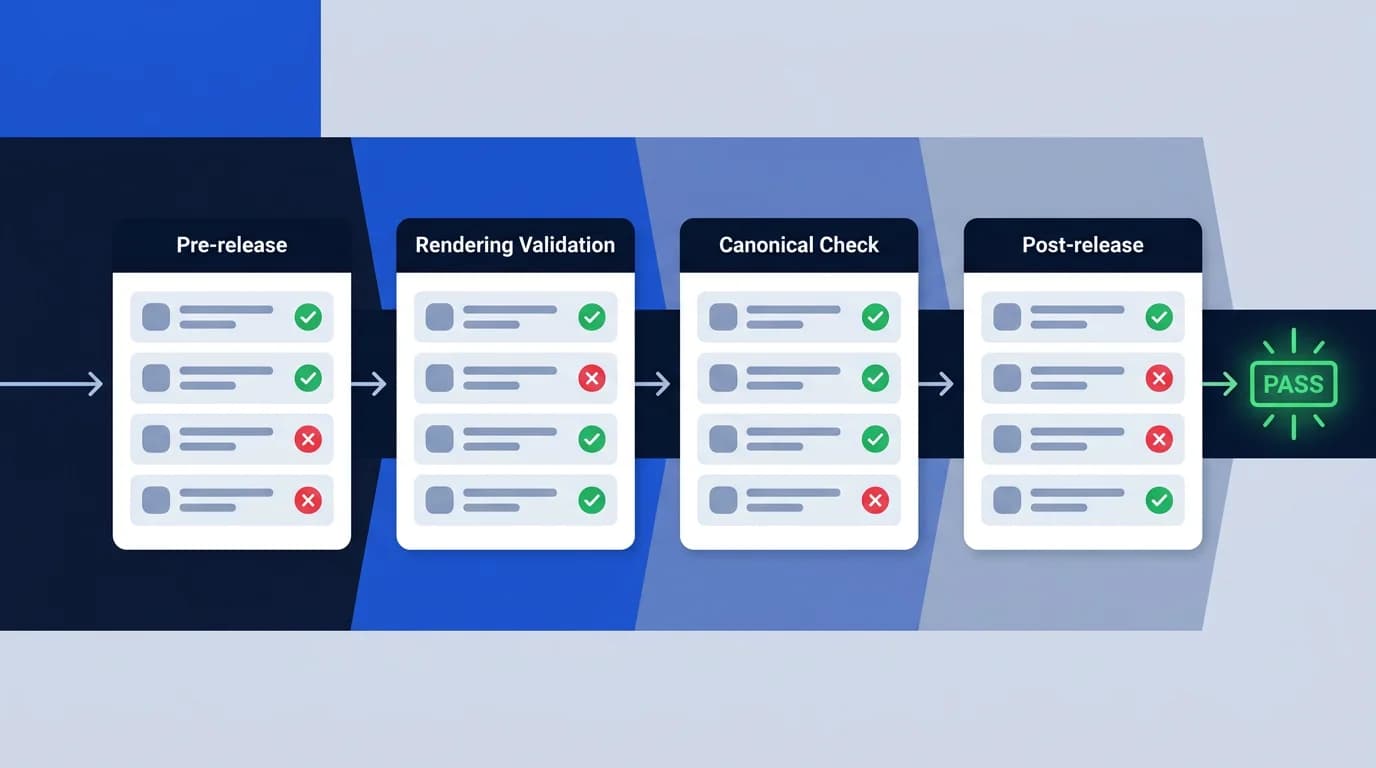
This guide explains what rendering QA should cover before and after releases, how to sample routes intelligently, and which checks matter most when a deployment might change what crawlers understand about the site.
Release QA should start with the first-response question
The most useful release question is simple: what does the crawler receive immediately after the deployment?
That means validating whether the raw HTML still contains:
- the intended title and H1
- the correct canonical URL
- stable meta descriptions and Open Graph tags
- visible content that explains the route
- schema or JSON-LD where the template expects it
What to validate in the first response
If the first response becomes weaker after release, the site can regress even when the full browser experience still looks fine, and the same logic applies to the performance budgets covered in Core Web Vitals for engineering teams.
Route-family QA beats one-page spot checks
The safest release review does not rely on one homepage check or one product URL. Rendering changes usually affect route families, not isolated pages.
Strong sampling often includes:
- one core landing page
- one editorial page
- one category or listing page
- one product or programmatic template
- one edge-case route with optional or sparse data
This is how teams catch template-level regressions before they spread quietly.
Canonical and metadata parity should be checked every release
Canonical regressions are common because route state, path normalization, and head management often change during frontend work even when no one intended to touch SEO.
Release QA should check:
- raw HTML canonical value
- hydrated canonical value
- whether internal links still point to the preferred route
- whether schema URLs align with the canonical
- whether cache or locale logic rewrites metadata after first response
Why canonical drift hides inside ordinary releases
This is one reason release QA overlaps directly with canonical issues on JavaScript websites. Canonical drift is often introduced quietly by ordinary release work.
Schema visibility matters as much as schema correctness
A route can keep valid schema in source code while still becoming weaker for SEO and AI visibility if that schema disappears from the first response or moves behind delayed rendering.
That is why release QA should verify:
- whether JSON-LD exists in raw HTML
- whether entity values still match visible content
- whether schema appears before hydration
- whether route-specific fields remain populated across real data states
How schema regressions resurface as AI visibility issues
This overlaps with structured data for AI visibility, because release-time schema regressions often look like "AI visibility" problems later.
Cache behavior is part of rendering QA
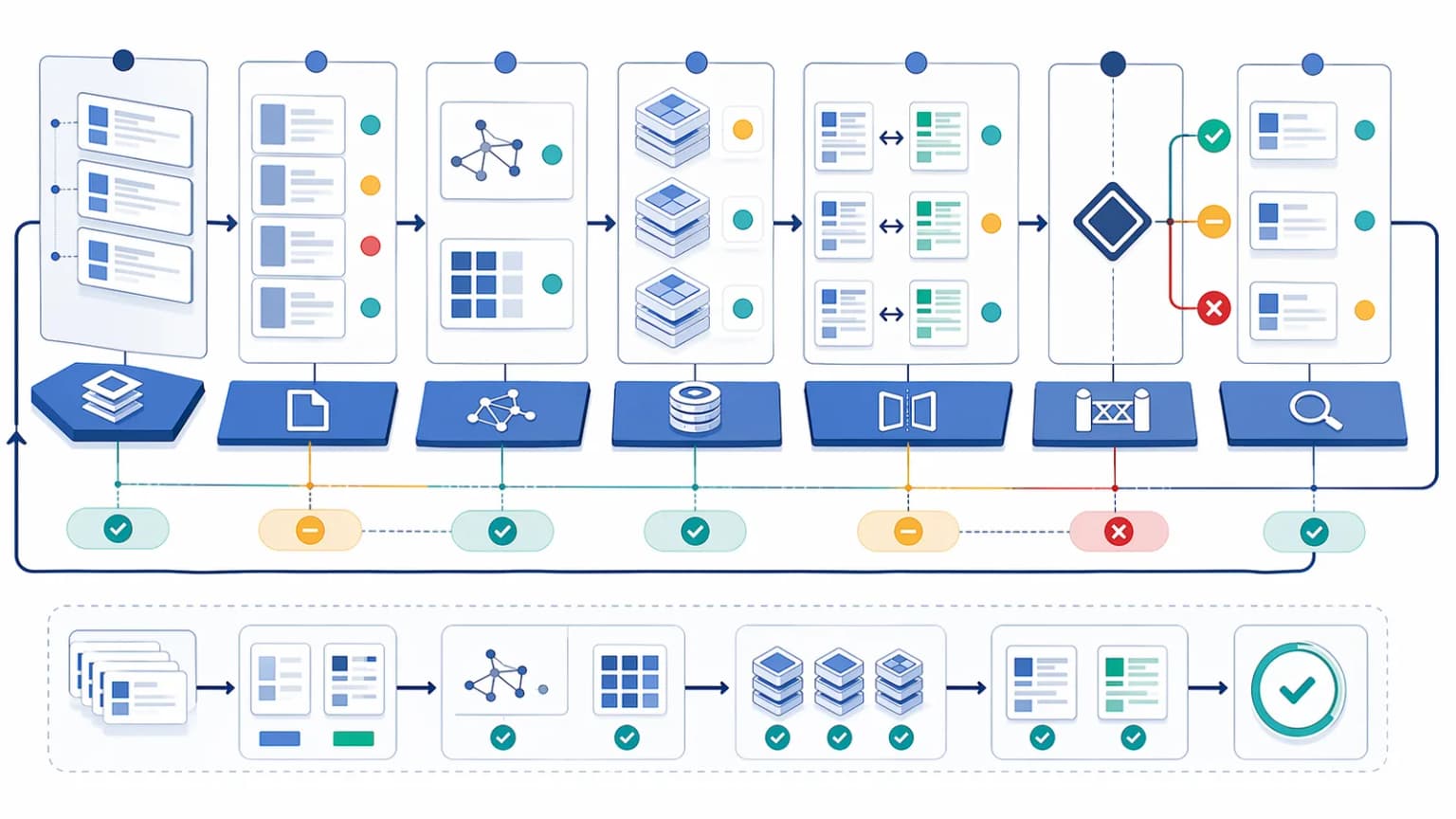
Modern sites often use ISR, SSR, edge caching, CDN layers, or prerender caches. That means a route can pass one check and still fail in production if another cache state serves different output.
Teams should validate:
- fresh route output
- cached route output
- regeneration behavior after content changes
- whether stale HTML keeps old metadata or old route meaning
- whether crawler-facing caches differ from user-facing ones
Why one browser refresh is not enough
This is why rendering QA cannot stop at one browser refresh.
Semantic parity should be a release gate for machine-facing delivery
If the site uses SSR, prerendering, or bot-aware delivery, release QA must confirm semantic parity across outputs. The goal is not to make the DOM identical. The goal is to keep the meaning of the route stable.
Useful parity checks include:
- same canonical destination
- same primary topic and H1 intent
- same visible core facts
- same meaningful internal links
- same route purpose in machine-facing and human-facing views
How to keep route meaning stable across audiences
This is where release QA overlaps with SSR cloaking risks and semantic parity. A release should not change route meaning across audiences by accident.
Category and app-like templates need extra attention
Some templates are more fragile during releases than others. High-risk types often include:
- category pages with filters and pagination
- programmatic or data-driven pages
- routes with optional data blocks
- pages where metadata depends on runtime state
- heavily interactive acquisition pages
These are often the templates where a small rendering regression creates large SEO impact.
A practical pre-release checklist
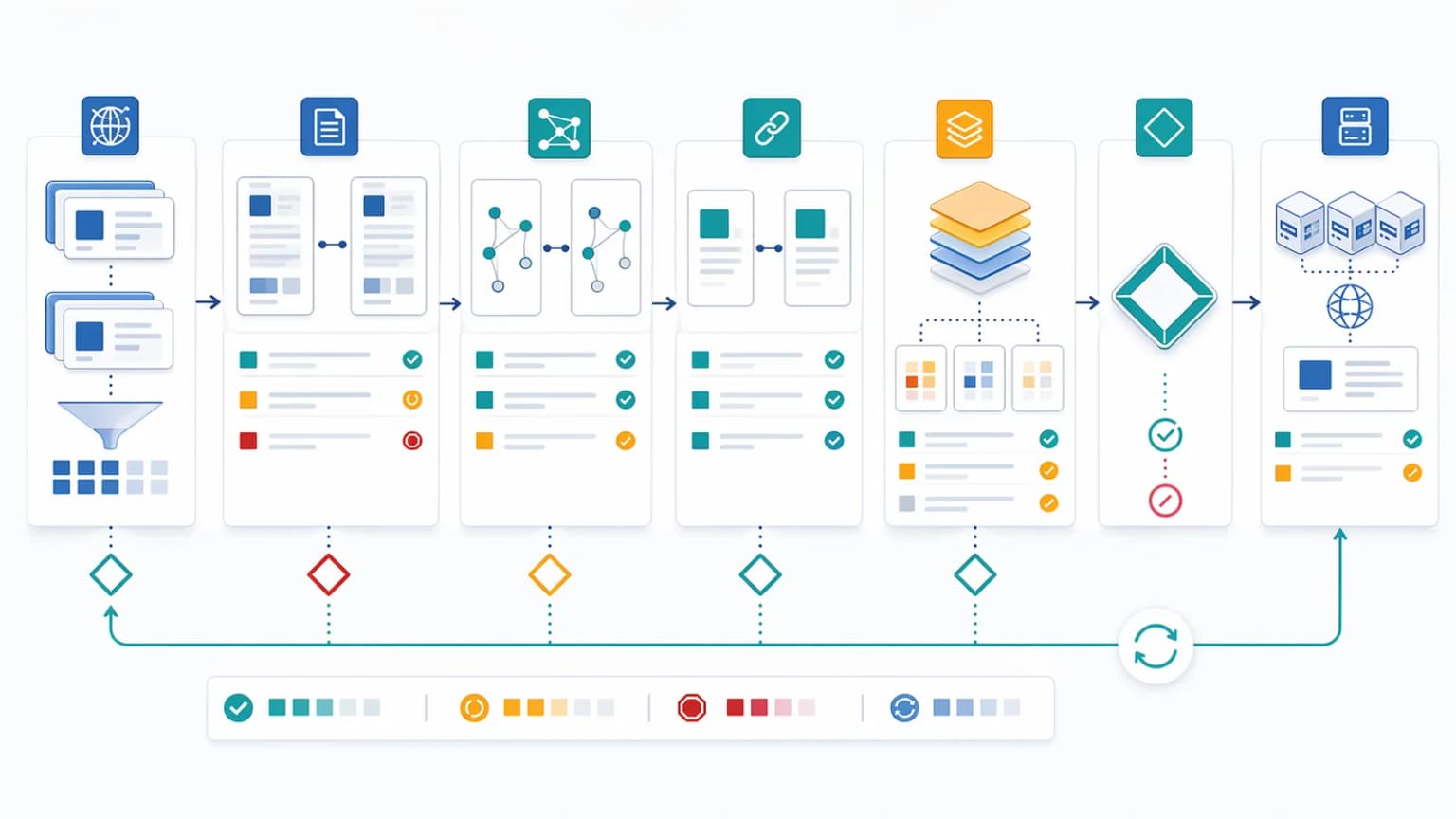
Before release, teams should usually confirm:
- Representative routes still return meaningful raw HTML.
- Canonicals, titles, and schema match the intended route meaning.
- Machine-facing output remains stable across template families.
- Cache behavior does not preserve stale route semantics.
- Important routes still pass bot-facing checks.
The goal is not exhaustive perfection. The goal is to catch the regressions that change how crawlers interpret the site.
A practical post-release checklist
After release, the most useful checks usually include:
- re-testing the sampled route families on production
- confirming that live caches match expected output
- checking crawler-facing tools on high-value URLs
- reviewing logs or monitors for unusual fetch behavior
- verifying that key route families still look healthy in sitemaps and internal links
Why some issues only show up after launch
Post-release QA matters because some issues only appear once production caching and routing logic are fully active.
Release QA should produce a repeatable operating model
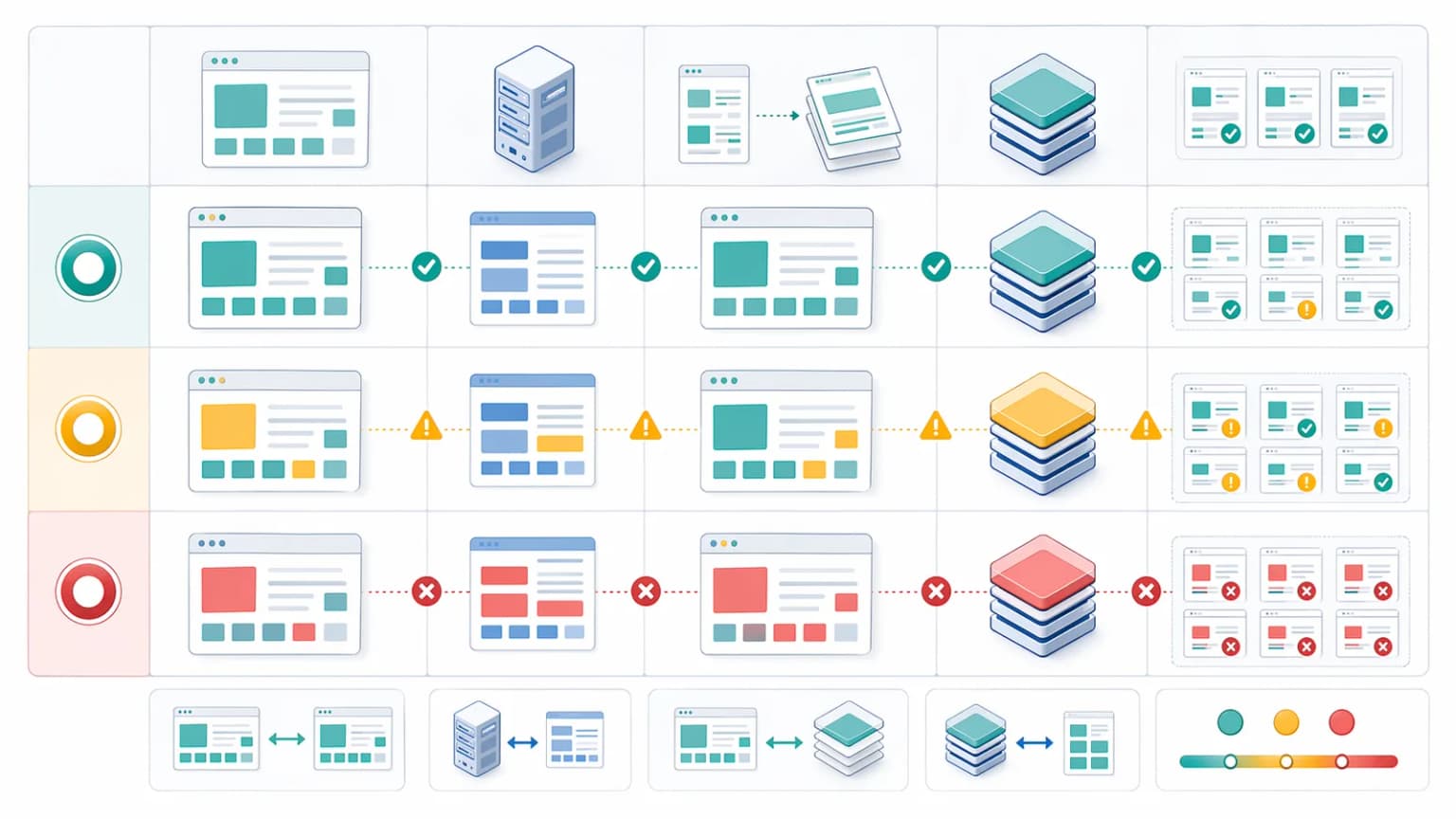
The strongest teams do not treat rendering QA as an improvised expert ritual. They turn it into a repeatable checklist owned by engineering and SEO together.
That usually means:
- fixed route samples per template family
- standard checks for canonicals, schema, and first-response HTML
- release gates for high-risk templates
- post-release revalidation of critical pages
How to make rendering QA part of delivery discipline
This turns rendering QA into part of delivery discipline instead of post-launch cleanup.
Common rendering QA mistakes
The most common mistakes are:
- checking only the browser UI
- testing only one or two flagship pages
- ignoring cache states
- validating code changes without validating live HTML
- skipping parity checks on bot-facing delivery paths
- assuming the framework will keep route meaning stable automatically
These mistakes usually create regressions that are invisible until search performance starts to move.
Conclusion
Rendering QA for SEO releases is about protecting machine-facing meaning. A deployment is safe only when the routes that matter still return the right canonicals, content, schema, and crawl signals in the first response and across the real cache states that production serves.
The strongest teams treat these checks as part of release engineering. That is what keeps routine deployments from turning into avoidable SEO recovery projects later.
Content Cocoon
Rendering QA Checklist Cluster
This article should connect release-time rendering QA back to canonical stability, machine-facing output, parity checks, and the broader technical SEO systems that determine whether a deployment changes what crawlers understand about the site.
Internal Pathways
Next.js Rendering Decisions for SEO and AI Visibility
A companion article for understanding why rendering choices need route-level QA instead of framework-level assumptions.
SSR Cloaking Risks and Semantic Parity
Useful when teams need to validate that machine-facing and user-facing versions keep the same meaning after release.
Indexation Recovery After Site Migrations
Relevant when release QA should prevent the same kinds of canonical, rendering, and route-family failures that often appear after migrations.
Technical SEO Audit
The parent service for teams turning rendering QA into repeatable checks across templates, deployments, and crawl-critical routes.
External Technical References
Prerender Checker
Helpful for validating whether release-time machine-facing output still returns the intended rendered HTML.
View as Bot vs Prerender
Useful when comparing crawler-facing output across rendering paths and deployment states.
SEO Audit Tool
Helpful when release QA needs to include metadata, status-code, and route-quality checks alongside rendering validation.
Bridge CDN, delivery-layer configuration
Useful when release QA has to cover edge cache behaviour and crawler routing as well as application output. In development.
Frequently Asked Questions
What is rendering QA for SEO releases?+
It is the practice of validating what crawlers actually receive before and after a deployment so HTML, metadata, canonicals, schema, and route meaning stay stable.
Why is checking the browser UI not enough?+
Because the frontend can look correct while raw HTML, cache states, or bot-facing output have regressed in ways that affect crawlability and indexation.
Which routes should teams sample first?+
Usually one or more URLs from each critical template family such as landing pages, editorial pages, category pages, products, and edge-case dynamic routes.
What makes rendering QA especially important after releases?+
Deployments often change routing, metadata timing, cache behavior, or machine-facing output indirectly, even when no one intended to change SEO-critical signals.