Soft 404s and thin pages create some of the most expensive quality problems on large websites because they often look valid enough to stay live while contributing very little real search value. A route may return 200, sit in the sitemap, and even receive internal links, yet still behave like a missing page, an empty state, or a low-value shell when crawlers evaluate it, the exact mismatch Google flags in its soft 404 guidance.
As of April 2026, this guide reflects current Google handling of soft-404 detection and the latest helpful-content expectations applied to large templated sites.
That is why these pages are so dangerous. They do not always look broken in the frontend. They often look merely "not great." At scale, that becomes a structural SEO problem because crawlers keep spending attention on pages that do not deserve it, while stronger routes compete for the same crawl and indexation capacity.
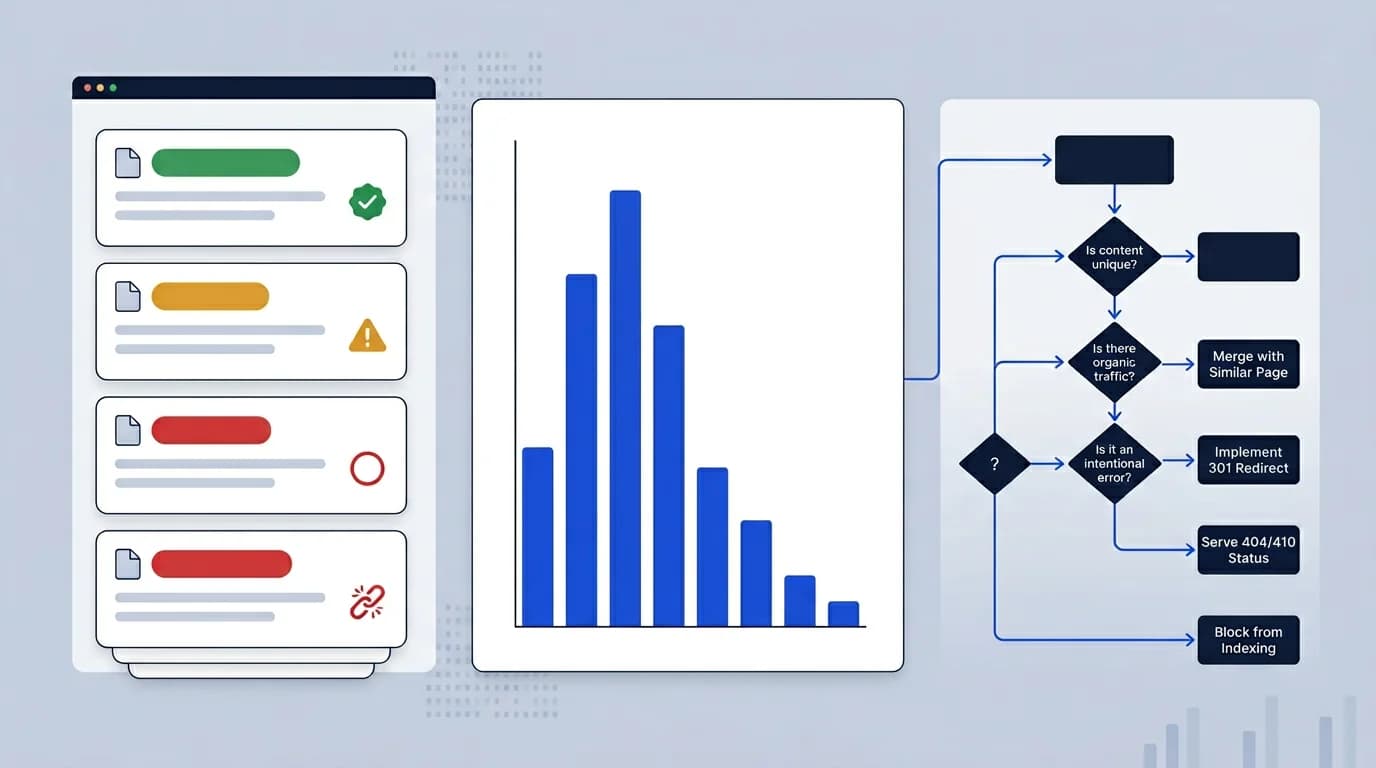
This guide explains how soft 404s and thin-value templates appear on modern websites, why they are often route-family problems rather than isolated mistakes, and how technical teams should decide whether to improve, consolidate, noindex, or retire them.
A soft 404 is often a meaning problem, not just a code problem
A soft 404 usually happens when the route behaves like a missing or useless page but still returns 200 OK. That mismatch matters because search engines do not rely only on the status code. They also interpret what the page actually offers.
Common soft-404-like patterns include:
- empty search or filter states presented as real pages
- expired products showing generic fallback content
- no-results pages that still return
200 - thin category or location pages with almost no unique value
- app shells that render successfully but communicate almost nothing meaningful
Why transport-layer success can still mean content-layer failure
This is why soft 404s sit so close to HTTP status codes for SEO and crawlers and to a broader technical SEO audit checklist. The route is saying "I am real" at the transport layer while implying "there is nothing useful here" at the content layer.
Thin pages are often structurally alive but practically weak
Not every thin page is a soft 404, but many thin templates create the same operational problem: they invite crawl and indexation effort without providing enough value to justify it, which is why Google's guidance on creating helpful, reliable content matters at the template level rather than the URL level.
These pages often look like:
- templated city or programmatic pages with shallow differentiation
- category pages with no meaningful listing or context
- product pages missing key data
- documentation routes with mostly placeholder shells
- low-value combinations created from filters, tags, or internal search
The route technically exists, but search systems may still treat it as weak, disposable, or not worth keeping.
Large websites usually create these problems by family
Soft 404s and thin pages rarely stay isolated. On large sites, they tend to emerge from repeatable systems such as:
- route families with missing data
- expired inventory handling
- filters that generate empty results
- programmatic templates with insufficient unique fields
- client-rendered shells that vary in completeness
Why template-family review beats single-URL fixes
That is why these issues should be reviewed by template family first. If one page is weak because the template is weak, fixing one URL does not solve the problem.
Crawl attention gets wasted on pages that should never have looked indexable
The crawler does not know your team's intent unless the route makes that intent clear. If the site keeps exposing low-value pages as if they were real landing pages, crawl attention gets pulled into the wrong places.
That usually results in:
- repeated fetches on low-value routes
- more pages stuck in crawled-but-not-indexed states
- weaker trust in whole template families
- slower attention on genuinely valuable URLs
How thin-route exposure becomes crawl waste
This is one reason the topic belongs close to crawl budget optimization and log file analysis. Crawl waste becomes obvious once the site treats too many thin routes as first-class pages.
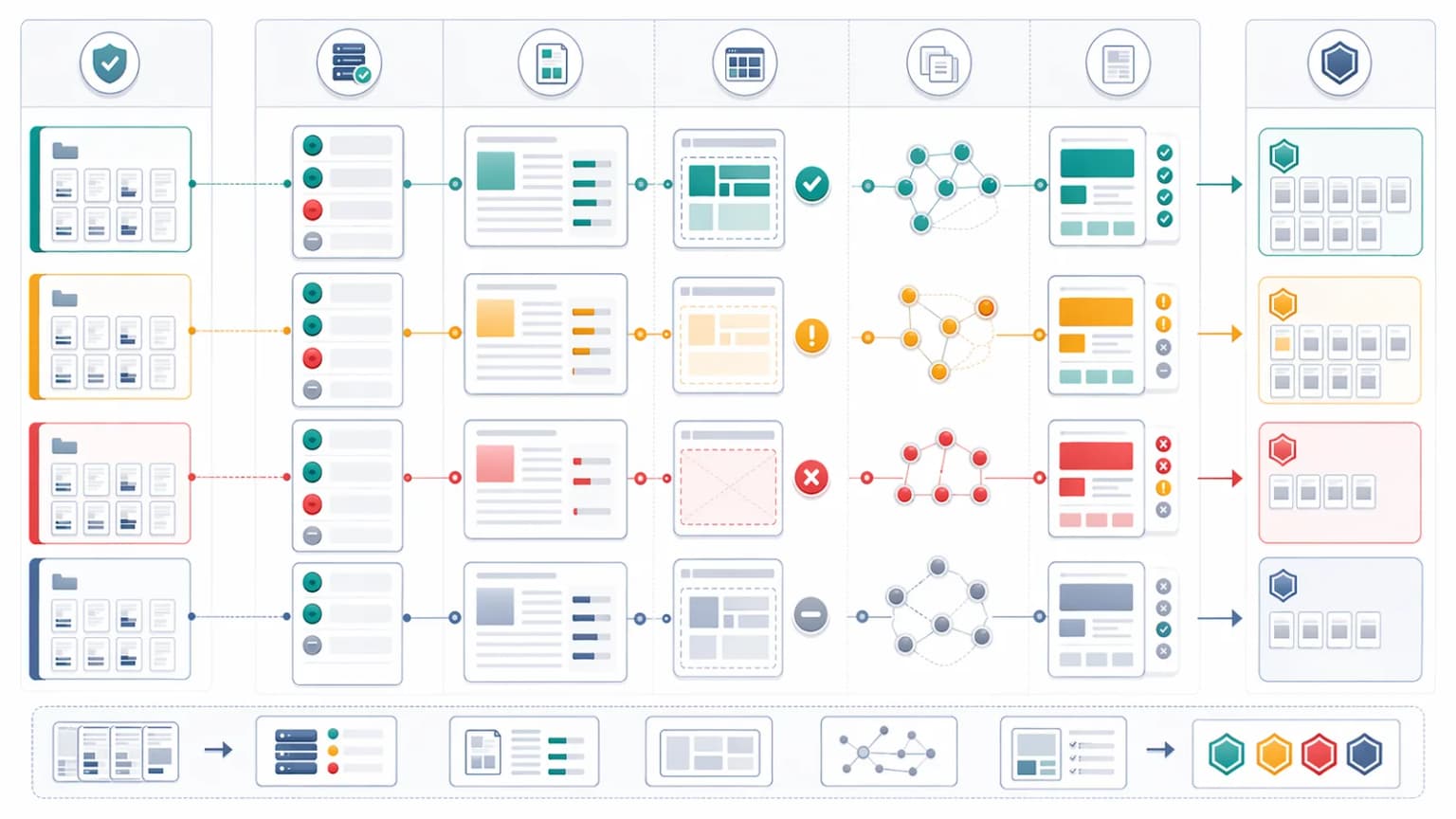
The real question is whether the page should exist as a search entity
When teams discover soft 404s or thin pages, they often jump straight to small content fixes. The deeper question is whether the route should exist as an indexable search entity at all.
Useful questions include:
- Does the page solve a distinct intent?
- Does it expose enough unique facts or inventory?
- Would a user arriving from search find real value there?
- Should the route be a live page, a support state, or a missing-page response?
When more text is the wrong fix
If the answer is weak across those questions, the route may need consolidation or removal, not just a larger text block.
200 OK should not be used to protect weak route states
One of the biggest technical mistakes is keeping obviously weak states behind 200 responses just because the template rendered successfully.
That commonly happens with:
- empty search results
- expired product URLs
- dead category states
- JS fallback pages after failed data fetches
If the route no longer represents useful content, the team should consider whether 404, 410, redirect consolidation, or noindex is a truer response than a fragile 200.
Rendering issues can make healthy pages look thin to crawlers
Some routes are not actually weak in full browser context but still look thin to crawlers because the meaningful content appears too late.
This is especially common on JavaScript-heavy sites where:
- headings load after hydration
- important body copy is client-fetched
- product or listing data mounts late
- route-level metadata appears only after runtime logic
When a thin page actually needs better delivery, not more content
This is where thin-page diagnosis overlaps with Next.js rendering decisions for SEO and AI visibility and prerendering. The page may not need more content. It may need stronger machine-facing delivery.
Thin-value templates and duplicate-value templates often overlap
A page can be thin because it says too little, but it can also be thin because it repeats what nearby pages already say. That is why soft-404 diagnosis often overlaps with duplicate content at scale.
Common overlap patterns include:
- many location pages with token-level variation
- listing pages whose item sets barely differ
- category pages with boilerplate copy and weak route purpose
- tag archives that add no real information beyond the parent topic
Why functionally dispensable pages still count as thin
The page may be live, but search systems still see it as functionally dispensable.
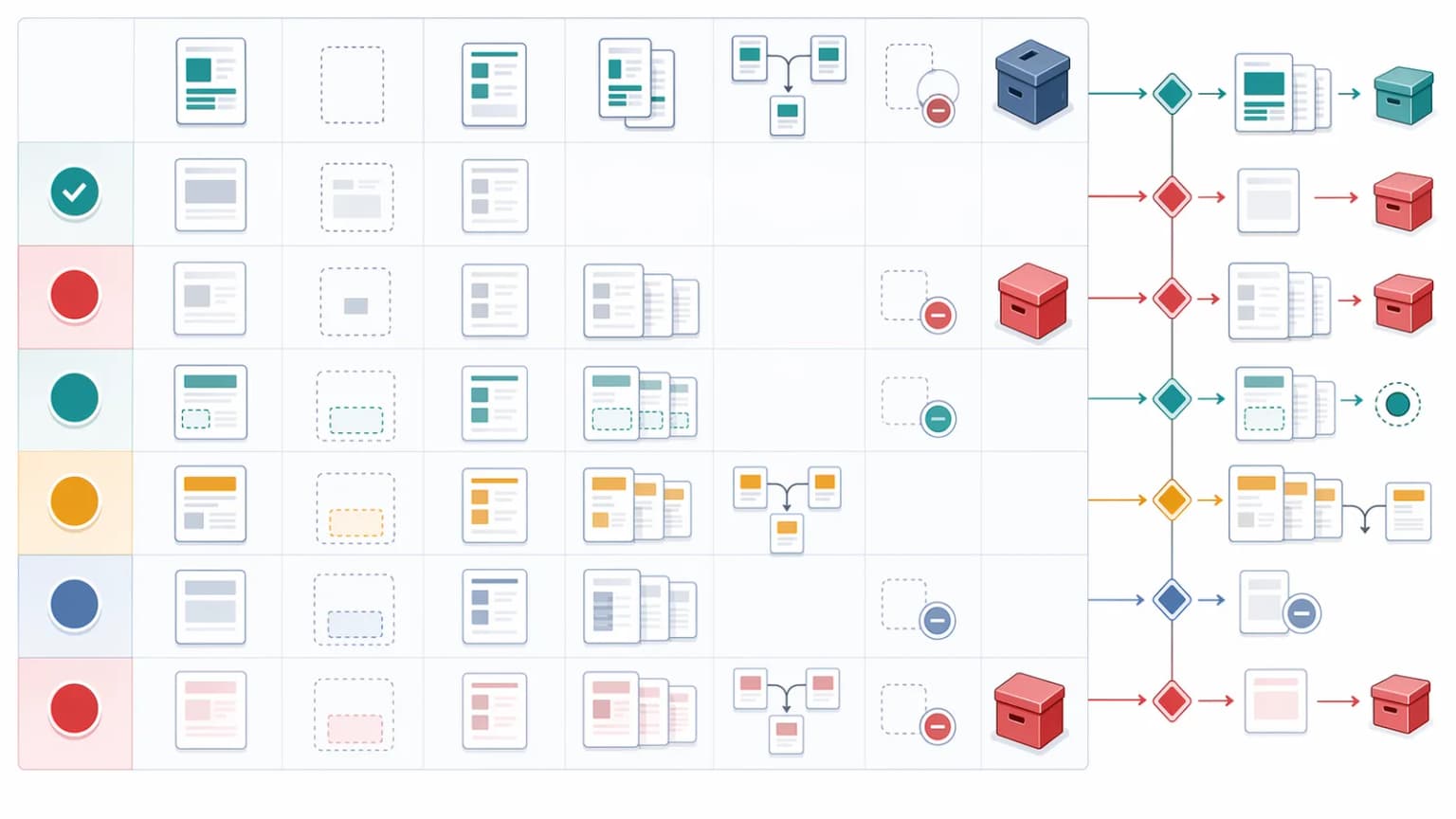
A practical cleanup framework
For most teams, the cleanest framework is to classify weak routes into four buckets:
- Improve: pages with real intent but weak content or delivery.
- Consolidate: pages that overlap too strongly with a better route.
- Noindex: pages useful for users but not strong enough for search.
- Retire: pages that should return
404or410because the content meaning is effectively gone.
This prevents endless debate over individual pages and helps the team respond consistently by route family.
What to validate before choosing a fix
Before deciding how to treat a weak route, teams should validate:
- what the raw HTML looks like
- whether the page returns the right status code
- whether the route has distinct purpose
- whether stronger adjacent pages already cover the same job
- whether bots keep revisiting the family in logs
This combination helps separate delivery problems from content-quality problems and route-governance problems.
Common soft 404 and thin-page traps
The most common traps are:
- treating empty states like live landing pages
- keeping dead URLs alive with generic fallback templates
- assuming every generated page deserves indexation
- adding boilerplate copy instead of solving route purpose
- returning
200for pages that no longer represent useful content - evaluating the browser UI instead of the crawler-facing output
These mistakes usually come from trying to preserve every URL instead of deciding which ones deserve to remain search entities.
Conclusion
Soft 404s and thin pages at scale are not just small-quality issues. They are route-governance issues. They waste crawl attention, weaken template trust, and fill the site with pages that look alive without behaving like strong search destinations.
The strongest teams do not treat these routes gently by default. They decide whether each weak template family should be improved, consolidated, noindexed, or retired. That clarity is what keeps large sites from turning their own low-value states into crawl and indexation drag.
Content Cocoon
Soft 404s and Thin Pages Cluster
This article should connect soft 404s and thin-value templates back to status-code honesty, indexation quality, route-family governance, and the broader technical SEO systems that determine whether weak pages should be fixed, consolidated, noindexed, or retired.
Internal Pathways
HTTP Status Codes for SEO and Crawlers
A companion article for understanding why many soft 404 problems begin when routes behave like missing pages but still return `200`.
Why Pages Are Crawled but Not Indexed
Useful when weak templates are being fetched and evaluated but still fail indexation because the route looks too empty, duplicative, or low-value.
Duplicate Content at Scale for Large Websites
Relevant when thin pages and soft 404-like routes are part of larger overlapping template families rather than isolated page failures.
Technical SEO Audit
The parent service for teams diagnosing empty states, weak templates, response-code mismatch, and route-family cleanup priorities together.
External Technical References
Crawler Checker
Helpful for checking whether routes that look valid in the browser still behave like low-value pages for crawlers.
SEO Audit Tool
Useful when soft 404 findings need to be reviewed alongside canonicals, status codes, and on-page quality signals.
Prerender Checker
Helpful when empty machine-facing output may be turning JS-heavy routes into thin or soft-404-like pages for bots.
Frequently Asked Questions
What is a soft 404 in SEO?+
A soft 404 usually means a page behaves like missing or useless content while still returning `200 OK`, which makes crawlers treat an effectively weak route like a live page.
Are thin pages always soft 404s?+
No. But many thin pages create the same operational problem because they consume crawl and indexation effort without enough distinct value to justify it.
What is the best first step when many weak pages exist?+
Group them by route family and decide whether each family should be improved, consolidated, noindexed, or retired instead of fixing pages one by one.
Can rendering issues make good pages look thin?+
Yes. On JavaScript-heavy sites, routes can look empty or incomplete to crawlers if meaningful content appears only after hydration or delayed data fetching.